Portable and temporary lighting for hazardous areas
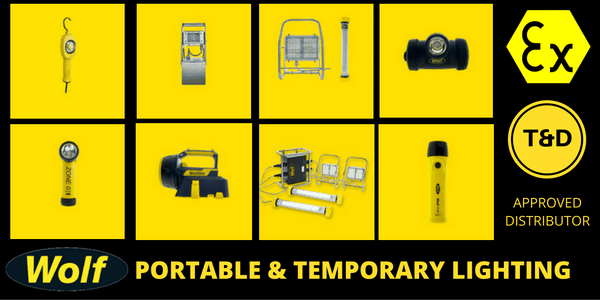
Shutdowns, tank and vessel entry, confined-space work and emergency repairs all need light in places where fixed fittings are missing or switched off. Portable ATEX lighting provides that light without becoming an ignition source. The range covers Zone 1 portable floodlights and hand lamps, fluorescent and LED work lights, and intrinsically safe head torches certified up to Zone 0.
Types of portable ATEX lighting
| Type | Power | Typical use |
|---|
| Head torches and hand torches | Battery, intrinsically safe (Ex ia) | Inspections, Zone 0 tank entry |
| Portable work lights / hand lamps | Rechargeable battery or low voltage | Maintenance at the job |
| Portable floodlights on stands | Mains or battery | Shutdown work areas, night work |
| Tank and vessel lights | Low voltage via transformer | Confined-space entry through manways |
| Temporary festoon / string lighting | Mains via certified connectors | Scaffolds, walkways during turnarounds |
What to check
- Zone rating – Zone 0 work needs Ex ia equipment
- Battery runtime for a full shift and charging location (always charge in a safe area)
- Low-voltage supply (often 24 V) for confined spaces
- Ingress protection, drop resistance and weight
- Certified plugs and connectors for any mains supply
Request a quote with your zone, quantities and delivery country – we reply with prices, certificates and lead times.
Frequently asked questions
Can portable ATEX lights be charged in the hazardous area?
No. Battery-powered ATEX lights must normally be charged in a safe, non-hazardous area, as stated in the manufacturer's instructions.
Which torches can be used in Zone 0?
Only intrinsically safe torches certified for category 1G (Ex ia), such as our Zone 0 head torches.
Why use low voltage for tank lighting?
Low voltage, typically 24 V from a transformer outside the vessel, reduces the risk of electric shock in wet, conductive confined spaces.

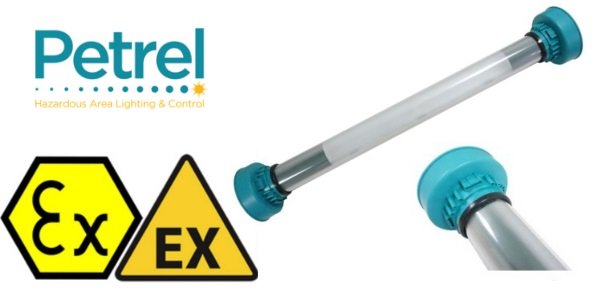
 ATEX Portable & Temporary Lighting – Hazardous Area Zone 1 & Zone 2 Lighting