ATEX electric process heaters
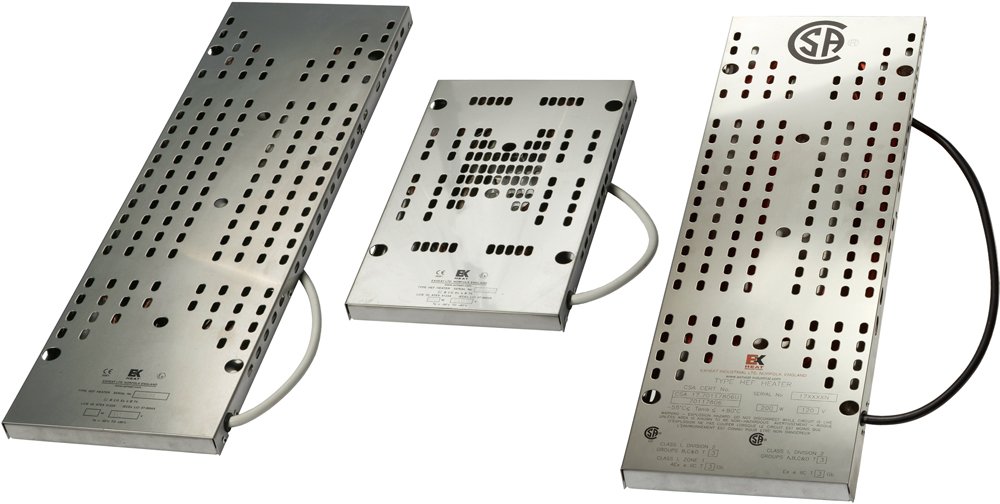
Electric heaters in hazardous areas keep processes at temperature, protect instruments from freezing and stop condensation inside panels. Because a heater is by definition a hot surface, its certified temperature class is the key safety parameter. This category includes EXHEAT HEF enclosure heaters (from 30 W to 500 W) for Zone 1 and Zone 2 panels, and Howden EH and FH flow (line) heaters for water and chemicals.
Types of process heater
| Type | Purpose | Typical application |
|---|
| Enclosure / anti-condensation heater | Keeps panels above dew point and frost-free | Control panels, junction boxes, analyser shelters |
| Flow / line heater | Heats liquid or gas flowing through a pipe | Process water, chemicals, fuel gas pre-heating |
| Immersion heater | Heats the contents of a tank or vessel | Storage tanks, sumps, separators |
| Air warmer / fan heater | Space heating | Pump houses, analyser houses, workshops |
Specifying a hazardous area heater
- Zone, gas group and the required temperature class (T3, T4…)
- Medium and flow rate (for flow heaters), or volume and heat-up time
- Power and supply voltage
- Temperature control: built-in thermostat or external controller with over-temperature cut-out
- Materials in contact with the process (stainless steel, Incoloy, titanium)
Request a quote with your requirements, quantities and delivery country – we reply with prices, certificates and lead times.
Frequently asked questions
Why is temperature class important for heaters?
A heater's surface temperature must always stay below the ignition temperature of the gas present. The T-class, such as T3 (200 °C) or T4 (135 °C), certifies that limit.
What size enclosure heater do I need?
It depends on enclosure size, insulation and the minimum ambient temperature. Typical anti-condensation heaters range from 30 W for small boxes to 500 W for large panels.
Do flow heaters need an over-temperature cut-out?
Yes. Hazardous-area flow heaters are normally fitted with a control thermostat plus an independent over-temperature limit to keep the surface within its temperature class.

 ATEX Electric & Process Heaters