Since the Construction Products Regulation (CPR, Regulation (EU) No 305/2011) was applied to cables, every power, control and communication cable intended for permanent installation in buildings and civil engineering works in the EU must be classified for its reaction to fire. The result is a set of codes such as Cca-s1b,d1,a1 printed on drum labels and datasheets. This article explains what those codes mean and how to make sure the cable you buy matches what your project and your country require.
Which cables fall under the CPR?
The CPR applies to cables placed on the market for permanent installation in buildings and other construction works. The harmonised product standard is EN 50575. Flexible cords for appliances, cables inside machines and cables for temporary use are generally outside its scope — but the same cable type can fall inside it when it is installed permanently in a building. When in doubt, ask your designer or the authority having jurisdiction.
The main Euroclasses
Reaction-to-fire performance is expressed in seven classes, from best to worst:
Classes B1ca to Dca are tested in bunched-cable fire tests that measure heat release and flame spread. Eca relies on the single-cable vertical flame test.
Additional classifications: s, d and a
For classes B1ca to Dca, three additional criteria are added:
- Smoke production (s1, s1a, s1b, s2, s3) – s1a is the lowest smoke production, s3 means no performance is declared.
- Flaming droplets (d0, d1, d2) – d0 means no flaming droplets during the test.
- Acidity (a1, a2, a3) – based on the conductivity and pH of the gases released; a1 is the least corrosive.
A cable labelled B2ca-s1a,d1,a1 is therefore a low-smoke, low-acidity cable with very limited contribution to fire — the type often required in escape routes, tunnels and public buildings.
Who decides which class is required?
The CPR sets the classification system, but it does not say which class to use where. Each member state does that in its national building or wiring regulations, and the requirements differ. Some countries require Cca or better in escape routes and public buildings, others specify Dca or Eca for general housing. Always confirm the required class with the project designer and the local regulations before ordering.
The Declaration of Performance (DoP)
For a cable within the scope of EN 50575, the manufacturer must draw up a Declaration of Performance and affix the CE marking. The class must appear on the label of the drum or coil. For Aca, B1ca, B2ca and Cca (assessment System 1+), a notified certification body certifies the cable and audits factory production control; for Dca and Eca (System 3), a notified laboratory carries out the type testing. As a buyer, you should:
- Ask for the DoP and check that its reference number appears on the drum label.
- Check that the cable type and cross-section range on the DoP cover what you are ordering.
- For Aca to Cca cables, check that the notified body number appears on the DoP and the CE label.
- Keep the DoP with the project documentation; inspectors and insurers may ask for it.
CPR is about reaction to fire, not fire resistance
A frequent misunderstanding: the Euroclass describes how much a cable contributes to a fire. It says nothing about whether the circuit keeps working during a fire. Circuits for emergency lighting, smoke extraction or fire pumps need fire-resistant cables tested for circuit integrity — such as (N)HXH FE180 cables with PH120 and E30–E90 ratings. We cover this in detail in our guide to fire-resistant cables.
Halogen-free does not automatically mean a high Euroclass
Halogen-free, low-smoke cables such as H05Z1-K / H07Z1-K or H07ZZ-F are designed to limit smoke and corrosive gases, which helps with the s and a classes. Their overall Euroclass still depends on the tested construction, so check the DoP rather than assuming. Read more in our article on halogen-free cables.
Practical tips for buyers
- Write the full class (for example Cca-s1b,d1,a1) into your purchase order, not just “CPR compliant”.
- Do not substitute a cable with a lower class without written approval from the designer.
- If you buy for several countries, check each country’s requirements separately.
- Keep traceability: drum numbers, DoP references and delivery notes.
How Wesourcia helps
When we quote cables for building projects in Europe, we state the Euroclass and check the DoP and drum labelling before shipment. Explore our industrial cables or send us your cable schedule with the required classes, and we will propose compliant options.
Frequently asked questions
Which CPR class do I need for my building?
The CPR defines the classes, but each EU country decides which class is required for which type of building and area. Check the national wiring or building regulations and the project specification; escape routes and public buildings usually require higher classes.
Is Eca enough for a house?
In several countries Eca is accepted for general wiring in residential buildings, while others require Dca or better. There is no single EU answer, so confirm the requirement with the designer or local authority before ordering.
Does a CPR class mean the cable is fire resistant?
No. The Euroclass describes reaction to fire, meaning how much the cable contributes to a fire. Circuits that must keep working during a fire need fire-resistant cables tested to standards such as IEC 60331, EN 50200 or DIN 4102-12.
Products mentioned in this article
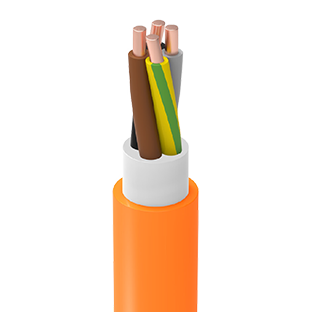 Industrial Cables
CablesThese power cables with special performance for use in power stations and intended supply power to equipments which must operate in fire conditions and during fire fighting. Suitable for indoor…
600 / 1000 V · -30°C to +90°C
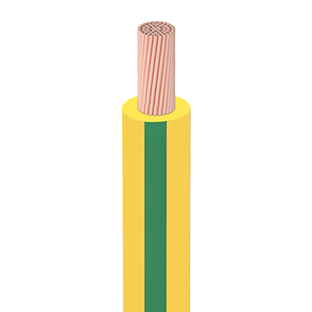 Industrial Cables
CablesThey are used as installation cables in distribution boards, switchboards and various appliances in closed areas when higher safety required in case of fire. They can be used on and…
H05Z1-K – 300/500V I H07Z1-K 450/750 V · -30°C to +70°C
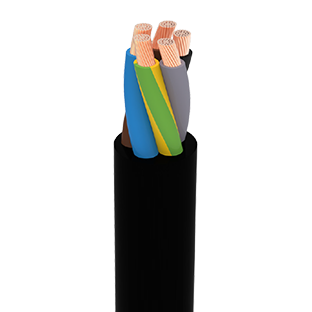 Industrial Cables
CablesThese halogen-free flexible cables are used as power and control cables temporary indoor and permanent outdoor apllications. It consist low grade smoke and corrosive gases and suitable to use for…
450/750 V (U0/U)
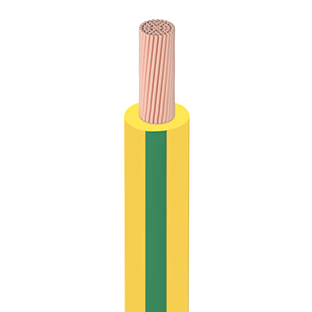 Industrial Cables
CablesThese halogen-free cables are used in internal installations only in dry and clean environments. Due to it’s characteristics they are flame retardant and self extingushing and produce no corrosive gases.
H05Z-K 300/500V – H07Z-K 450/750V (U0/U) · -40°C to +90°C
Need a different size, standard or quantity? Request a quote