Emergency lighting, fire alarm systems, smoke extraction fans, sprinkler pumps and evacuation lifts all have one thing in common: they must keep working while the building is burning. The cables that feed them are therefore specified not only for low smoke but for circuit integrity — the ability to keep transmitting power or signals for a defined time under fire conditions. This article explains the main European test standards and how to read them on a datasheet.
Reaction to fire versus resistance to fire
Two very different properties are often mixed up:
- Reaction to fire describes how much a cable contributes to a fire (flame spread, heat, smoke). In the EU this is the CPR Euroclass, covered in our CPR guide.
- Resistance to fire describes how long a circuit keeps working when exposed to fire. This is what FE180, PH120 and E90 refer to.
A safety circuit usually needs both: a fire-resistant cable that is also halogen-free and low-smoke.
The main test methods
The last point is important. An E90 rating applies to a tested installation system: the cable together with specific supports, clips and spacing. Using the right cable with the wrong fixings does not give you E90.
Reading a typical designation
A cable such as (N)HXH FE180 PH120 / E30–E90 tells you:
- N – standard type (German naming), H – halogen-free, X – cross-linked insulation, H – halogen-free sheath;
- FE180 – insulation integrity for 180 minutes per IEC 60331;
- PH120 – 120 minutes under the EN 50200 test with mechanical shock;
- E30–E90 – system integrity for 30 to 90 minutes when installed with approved fixing systems, depending on the cross-section and installation.
Where fire-resistant cables are used
- Fire alarm and voice evacuation systems.
- Emergency and escape lighting circuits.
- Smoke and heat exhaust ventilation fans and dampers.
- Fire-fighting lifts and sprinkler or hydrant pumps.
- Safety systems in tunnels, metro stations and car parks.
National regulations and standards (for example for fire alarm systems or emergency lighting) define the required integrity time. In many cases 30 minutes is the minimum for evacuation and 90 minutes for fire-fighting systems — but always confirm with the project’s fire strategy.
Installation is half of the result
Fire-resistant cable performance depends heavily on installation:
- Use metal fixings and trays listed in the system certificate; plastic clips fail early in a fire.
- Respect the maximum support spacing and the bending radii.
- Use fire-rated junction boxes and terminals where the circuit is interrupted.
- Keep documentation of the tested system with the installation records.
Combining fire resistance with halogen-free performance
Most fire-resistant cables for European buildings are also halogen-free and low-smoke, so they meet both the integrity requirement and the smoke and acidity requirements in escape routes. For non-safety circuits in the same areas, halogen-free cables such as H07ZZ-F or screened HSLCH control cables are common choices. Read more in our halogen-free cable guide.
What to put in your enquiry
- Required integrity standard and time (for example “PH120 and E90”).
- Whether a system certificate with fixings is needed, and which fixing system the installer will use.
- Core count, cross-sections and screen requirements (signal or power).
- Required CPR Euroclass for the building area.
- Sheath colour — many projects use red or orange for fire safety circuits.
Send these details through our quote request and we will propose cables with the matching certificates. You can also browse our full range of industrial cables.
Frequently asked questions
What does FE180 mean?
FE180 indicates that the cable maintained circuit integrity for 180 minutes when tested under flame according to the IEC 60331 series. It refers to the cable itself, not to the complete installation with its fixings.
Why does E90 depend on the fixings?
E30 to E90 ratings under DIN 4102-12 are tested on complete systems, including trays, clips and supports. If the cable is installed with fixings that were not part of the tested system, the rating cannot be claimed.
Do fire-resistant cables also need a CPR class?
Yes, when they are installed permanently in buildings in the EU. The CPR Euroclass describes reaction to fire, while FE180, PH or E ratings describe resistance to fire. Both are usually specified for safety circuits.
Products mentioned in this article
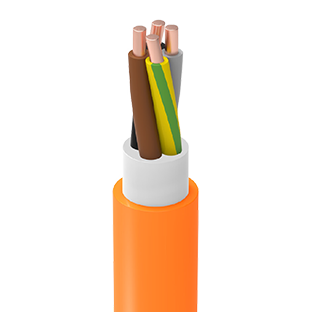 Industrial Cables
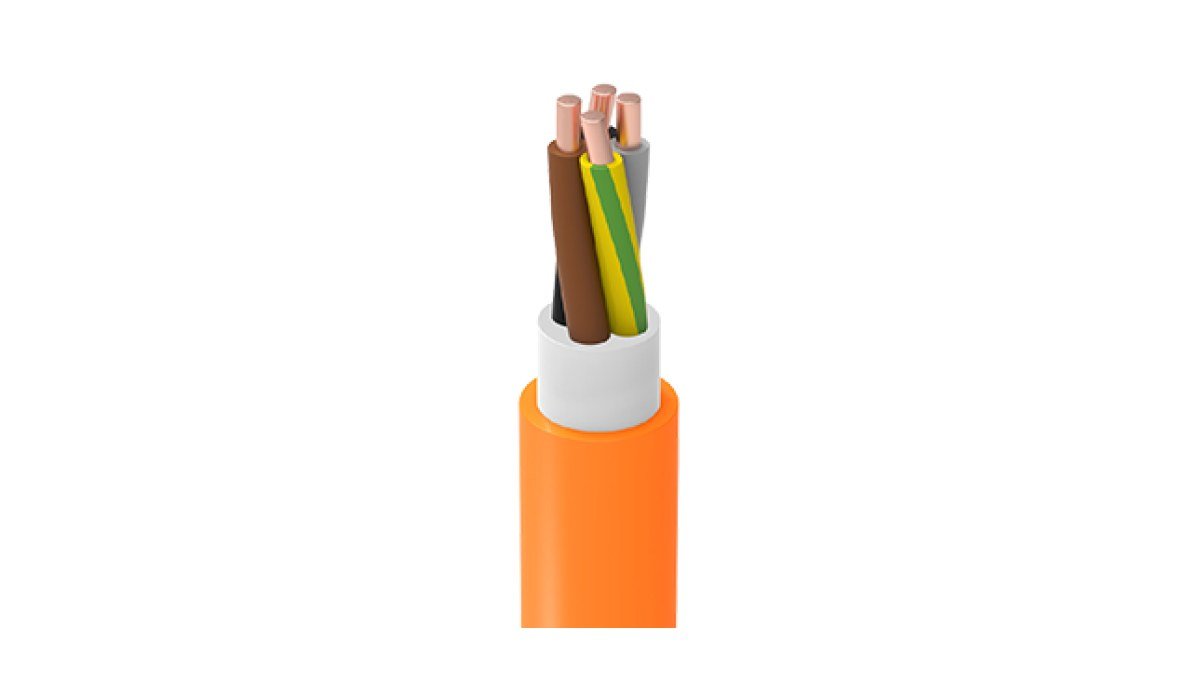
CablesThese power cables with special performance for use in power stations and intended supply power to equipments which must operate in fire conditions and during fire fighting. Suitable for indoor…
600 / 1000 V · -30°C to +90°C
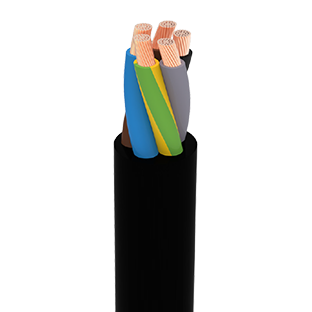 Industrial Cables
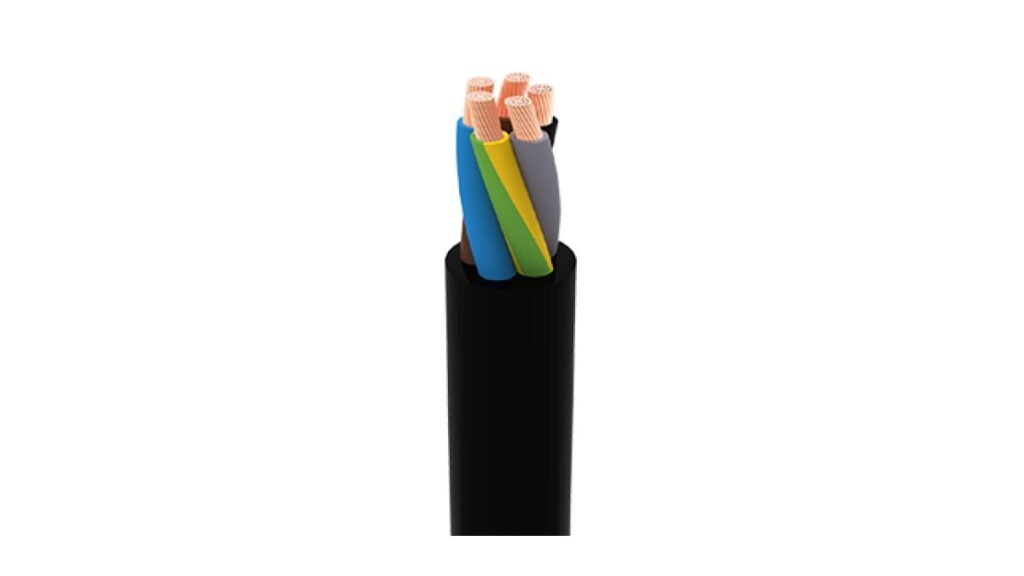
CablesThese halogen-free flexible cables are used as power and control cables temporary indoor and permanent outdoor apllications. It consist low grade smoke and corrosive gases and suitable to use for…
450/750 V (U0/U)
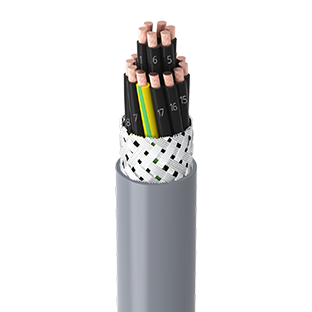 Industrial Cables
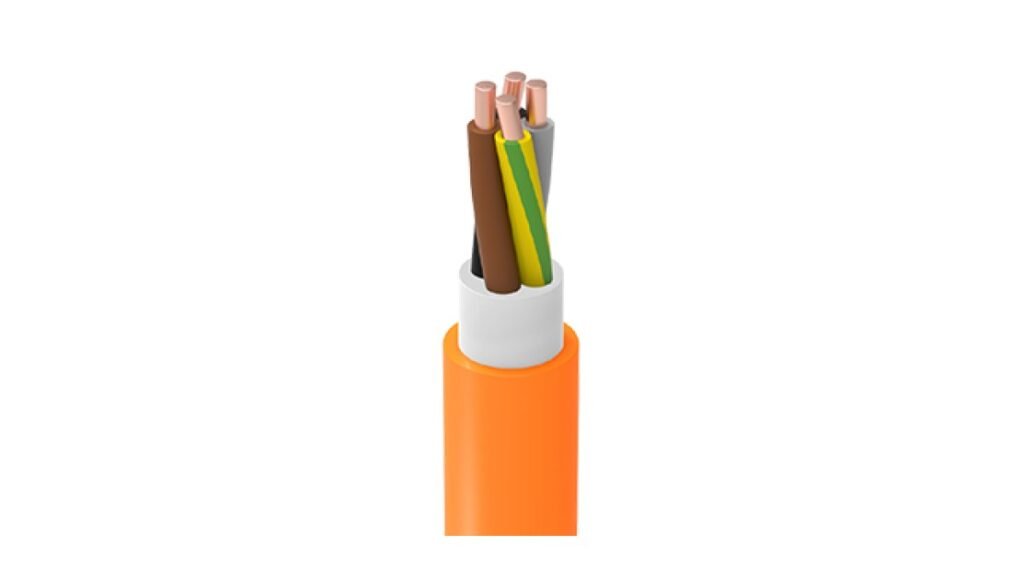
CablesThese cables are used for control, measuring and monitoring in engineering projects and various electronic systems in closed areas where electromagnetic disturbances exists and when higher safety required in case…
300/500 V (U0/U) · -5°C to +70°C
Need a different size, standard or quantity? Request a quote