Europe’s charging network is expanding rapidly, driven by vehicle sales and by EU rules such as the Alternative Fuels Infrastructure Regulation (AFIR), which sets deployment targets for public charging along major roads. Every wallbox, public AC post and DC fast charger needs cables — both inside the charger and in the charging lead that connects to the car. Those cables face daily handling, being run over, rain, UV and temperatures from Nordic winters to Mediterranean summers.
Two kinds of charging cable
- Charging leads – the flexible cable with a connector at one or both ends that connects the vehicle to the charger. They are handled by the public and must be extremely robust.
- Internal and supply cables – the cables inside the charging station and those feeding it from the distribution board. These follow general installation cable rules.
EN 50620 for charging leads
In Europe, the reference standard for EV charging cables is EN 50620. It covers flexible cables for AC charging (modes 1 to 3) and defines harmonised-style types such as:
- H05BZ5-F – 300/500 V, permitted by EN 50620 for mode 1 only.
- H07BZ5-F – 450/750 V, the usual choice for Mode 3 charging leads.
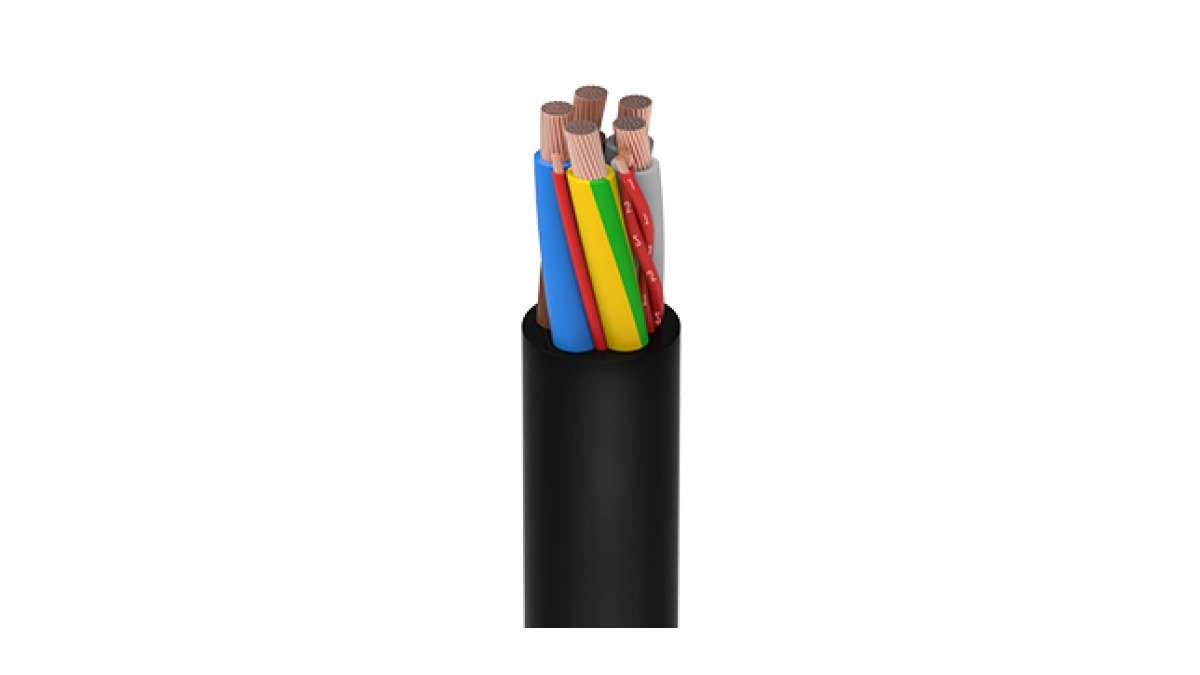
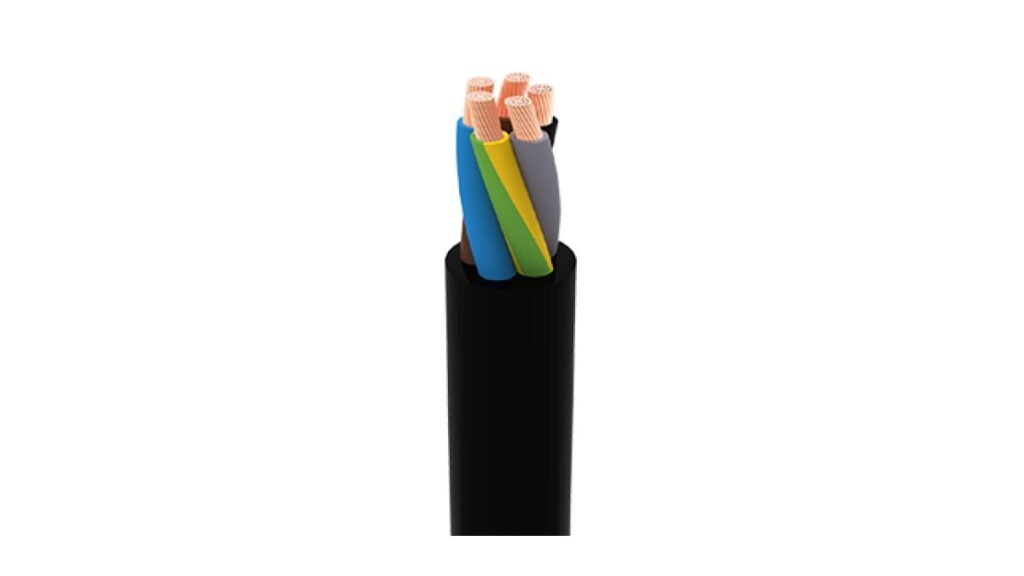
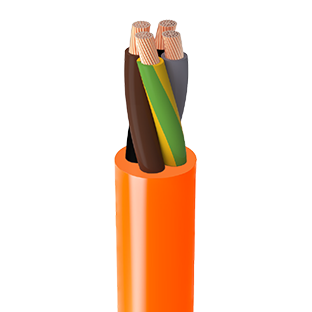
These cables combine elastomer-type insulation with a tough, flexible thermoplastic elastomer sheath that resists abrasion, crushing, UV and ozone, and stays flexible at low temperatures. They include power cores, an earth core and smaller control/signal cores for the communication between vehicle and charger. Our AC charging cable H05BZ5-F / H07BZ5-F follows this design.
DC charging cables (mode 4) are covered by a separate standard, EN IEC 62893-4.
AC Mode 3 charging
Most home, workplace and destination charging in Europe is AC “Mode 3” charging with Type 2 connectors (IEC 62196-2). The charging lead is either fixed to the wallbox (tethered) or supplied separately with the vehicle. Typical currents are 16 A or 32 A, single-phase or three-phase, so cables usually have five power and earth cores plus control cores, with cross-sections chosen for the current and the cable length.
DC fast charging
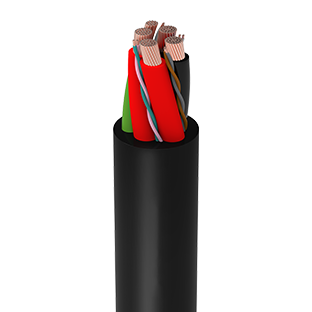
DC chargers deliver much higher currents directly to the vehicle battery. Charging cables for DC need larger conductors, additional signal cores and, at very high power, active cooling. For lower-power DC chargers, air-cooled cables such as our DC charging cable are used. For high-power chargers, cable design is closely tied to the connector and cooling system supplied by the charger manufacturer.
What charge-point manufacturers should check
- Compliance with EN 50620 (AC) or EN IEC 62893-4 (DC) and the relevant third-party certificate.
- Current rating at the expected ambient temperature and cable length, including when the cable is coiled on the charger.
- Mechanical robustness – crush resistance (vehicles drive over leads), abrasion, flexing at low temperature.
- UV, ozone and weather resistance for outdoor posts.
- Control core design compatible with the connector and the charging protocol.
- Halogen-free and flame-retardant properties if the charger is installed in car parks or buildings.
- Documentation: datasheet, certificate, RoHS and REACH statements — see our guide to RoHS, REACH and WEEE.
Supply cables to the charger
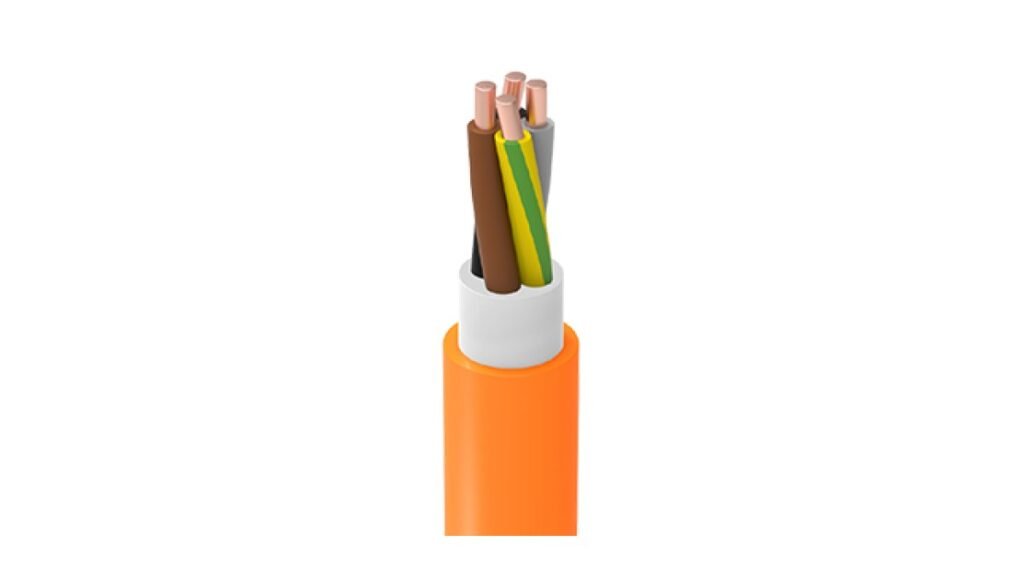
The cable feeding the charger from the distribution board is a normal installation cable, chosen for current, voltage drop, installation method and the local wiring rules. If it is permanently installed in a building, it also falls under the CPR — read our CPR guide. For temporary or mobile chargers, robust flexible cables such as H07BQ-F with PUR sheath are a good option.
Source EV cables with Wesourcia
We supply EN 50620 charging cables to charge-point manufacturers and installers across Europe, in standard cross-sections and on drums or cut lengths. Browse our EV charging cables or request a quote with your current, core configuration and annual volume.
Frequently asked questions
Which standard applies to EV charging cables in Europe?
EN 50620 is the European standard for charging cables for electric vehicles. It covers AC charging cables and defines types such as H07BZ5-F for Mode 3 charging leads. DC charging cables are covered by EN IEC 62893-4.
What is Mode 3 charging?
Mode 3 is AC charging from dedicated charging equipment, such as a wallbox or public post, with control and safety communication between the charger and the vehicle. In Europe it usually uses Type 2 connectors.
Why are DC charging cables thicker?
DC fast chargers deliver much higher currents, so the conductors must be larger. At very high power, cables are actively cooled to keep their size and weight manageable.
Products mentioned in this article
 EV Charging Cables
CablesThese cables suitable for trailing EV plug connections to vehicle. The charging cables are applicable for charging modes 1-3 of EN 61851-1.
 EV Charging Cables
CablesThese cables suitable for trailing EV plug connections to vehicle. The charging cables are applicable for charging mode 4 of EN 61851-1.
1,5 kV · -40°C to +90°C
 Industrial Cables
CablesThese cables are flexible power cords of electrical tools and equipments, agricultural machines and for sea vessels power connection in marinas and shipyards. Thanks to it’s construction it is suitable…
450/750 V (U0/U) · -40°C to +90°C
Need a different size, standard or quantity? Request a quote