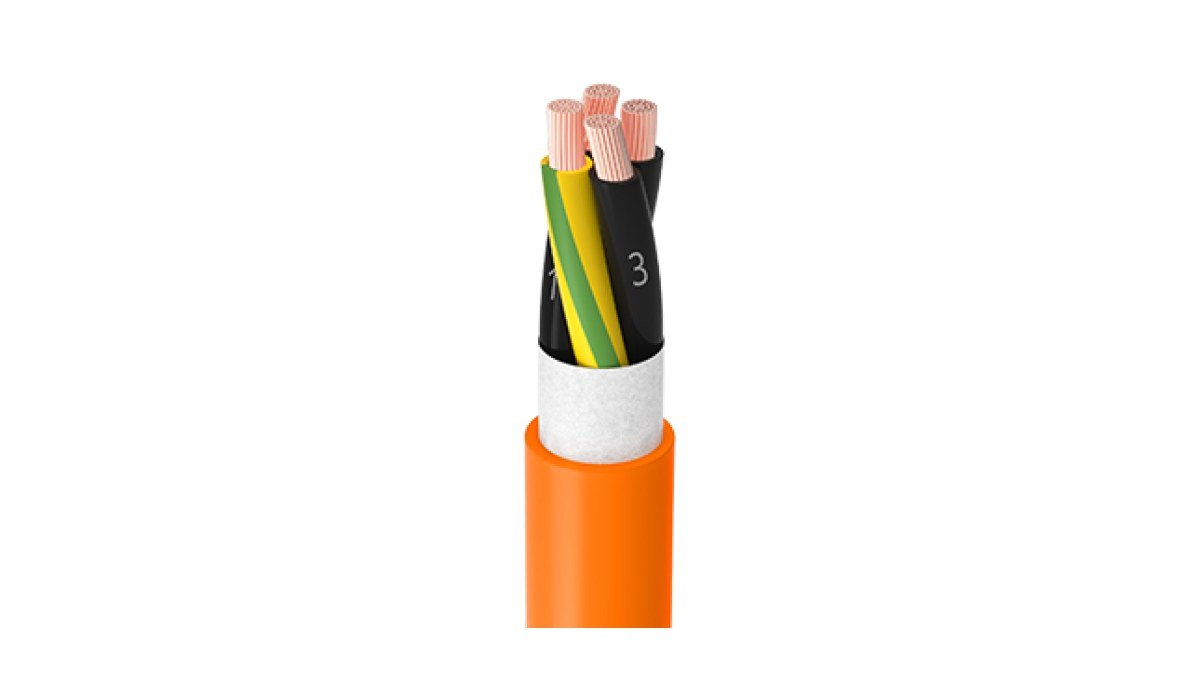
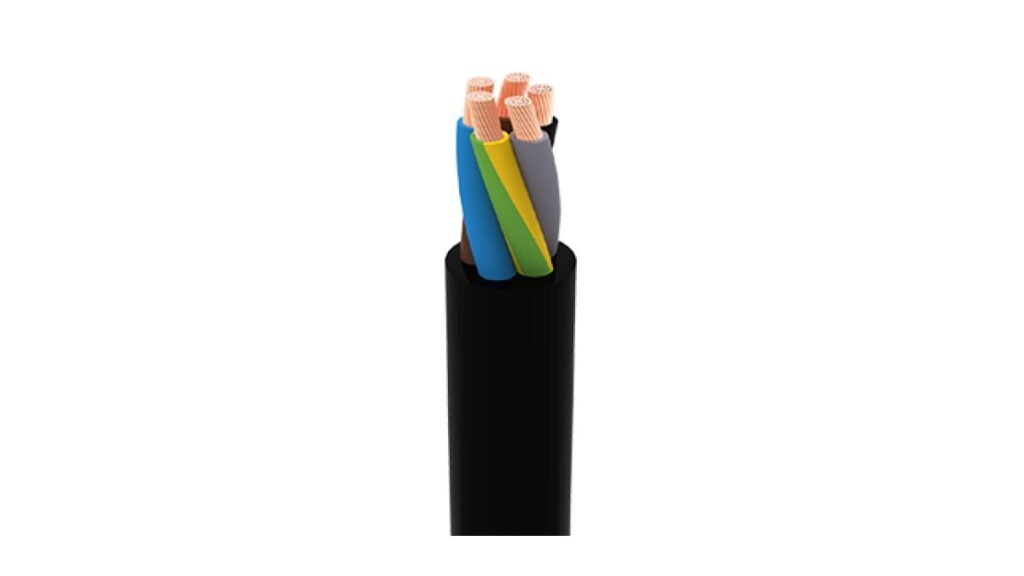
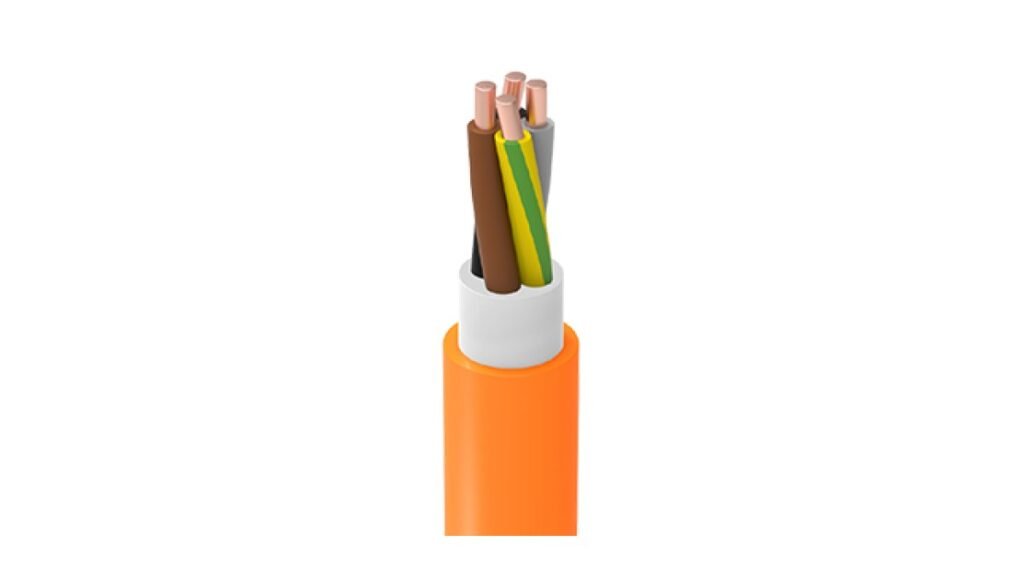
Cables that move thousands of times a day — in drag chains, gantries, packaging machines and robots — fail in ways that static cables never do: corkscrewing, broken conductors, worn sheaths and cracked insulation. The single most effective way to avoid those failures is to choose a cable designed for continuous flexing, usually with a polyurethane (PUR) outer sheath.
Why PUR?
Compared with PVC, a polyurethane sheath offers:
- High abrasion and tear resistance – important where cables rub against each other or against chain links.
- Good oil and coolant resistance – essential in machine tools and automotive plants.
- Flexibility at low temperatures – PUR stays flexible where PVC becomes stiff.
- Resistance to notching and cutting, which protects cables on rough machine surfaces.
- Halogen-free formulations are widely available.
PUR or PVC/PUR?
Many cables combine PVC core insulation with a PUR outer sheath. This is a cost-effective construction for moderate flexing and oil exposure. Fully optimised drag-chain cables use special core insulation and short-lay stranding designed for millions of bending cycles.
Designing a reliable drag-chain installation
Even the best cable fails early if the cable carrier is badly filled. Follow these rules:
- Bending radius – respect the minimum bending radius for moving applications, which is larger than for fixed installation (often 7.5 to 10 × the outer diameter; check the datasheet).
- Fill and separation – leave about 10 % free space around each cable and separate heavy and light cables with dividers.
- No twisting – lay cables from the drum without twisting; unroll them, do not pull them off over the drum flange.
- Strain relief – fix the cable at both ends of the carrier, not inside the moving part.
- Travel length and speed – long travels and high accelerations need cables rated for them; tell your supplier.
Screened cables on moving machines
Servo motors and encoders on moving axes need screened cables. A braid in a moving cable must be designed for flexing; standard braids in static cables break and lose screening effectiveness. Choose a screened PUR cable rated for continuous flexing, and terminate the screen with 360° EMC glands.
Pendant and hoist control
Crane and hoist pendant stations are another demanding application: the cable hangs vertically, carries its own weight and is handled every day. A dedicated pendant control cable with integrated strain-relief elements avoids the conductor breakage that occurs when a standard control cable is used. For reeling and festoon systems on cranes, see our guide to reeling cables.
When PVC is still fine
For fixed installation inside panels and machines, where the cable is only bent during installation, PVC control cables such as YSLY remain a sensible and economical choice. The extra cost of PUR is justified wherever cables move, are exposed to oil or are handled frequently.
Request a selection
Tell us your application — bending radius, travel length, speed, number of cycles, oil exposure and temperature — through our quote form, and we will propose suitable PUR or PVC/PUR cables from our industrial cable range.
Frequently asked questions
Why are PUR cables better in drag chains?
Polyurethane sheaths resist abrasion, tearing and oil, and stay flexible at low temperatures. Combined with suitable conductor stranding and core design, they withstand the millions of bending cycles found in cable carriers far better than PVC.
What bending radius should a drag-chain cable have?
Moving applications need a larger radius than fixed installation, often around 7.5 to 10 times the cable’s outer diameter. Always use the value given on the cable datasheet for continuous flexing.
Do I need a screened cable on a moving axis?
Servo motor and encoder cables on moving axes should be screened with a braid designed for continuous flexing. Standard braids in static cables can break and lose their screening effect after repeated movement.
Products mentioned in this article
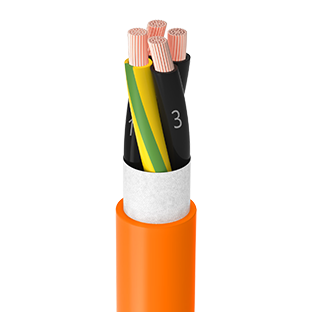 Industrial Cables
CablesThese polyurethane sheathed cables are used in mobile equipments, machines, production lines, industial machinery and movable appliances which work under high mechanical stress. This cable is also very suitable for…
300 /500 V (U0/U) · -40°C to +90°C
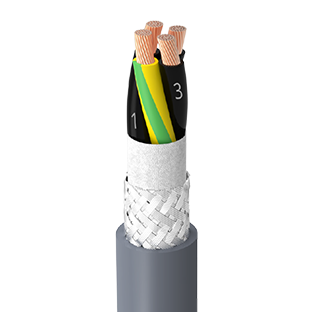 Industrial Cables
CablesThese polyurethane sheathed cables are used in electrical tools, mobile equipments, machines, production lines, industial machinery and movable appliances which work under normal mechanical stress. This cable is also very…
300 /500 V (U0/U) · -5°C to +70°C
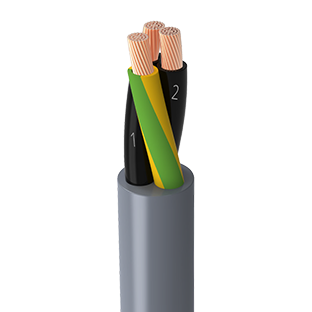 Industrial Cables
CablesThese polyurethane sheathed cables are used in electrical tools, mobile equipments, machines, production lines, industial machinery and movable appliances which work under normal mechanical stress. This cable is also very…
300/500 V (U0/U) · -5°C to +70°C
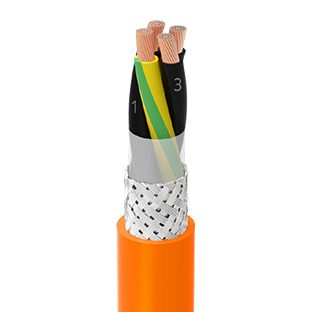 Industrial Cables
CablesThese polyurethane sheathed cables are used in electrical tools, mobile equipments, machines, production lines, industial machinery and movable appliances which work under normal mechanical stress. This cable is also very…
300 /500 V (U0/U) · -5°C to +70°C
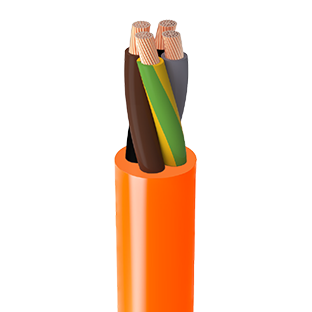 Industrial Cables
CablesThese cables are flexible power cords of electrical tools and equipments, agricultural machines and for sea vessels power connection in marinas and shipyards. Thanks to it’s construction it is suitable…
450/750 V (U0/U) · -40°C to +90°C
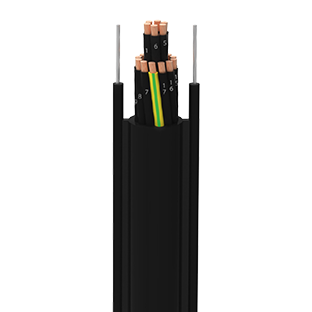 Industrial Cables
CablesThese pendant cables are used as control or feeder cables in lifts and hoists. The two steel load bearing elements can be detached without damaging the outer sheath and fixed…
300/500 V (U0/U) · -25°C to +90°C
Need a different size, standard or quantity? Request a quote