European ports are investing heavily in automation and electrification: ship-to-shore (STS) cranes, rail-mounted and rubber-tyred gantries, stackers and reclaimers increasingly run on electrical power supplied through reeling cables. The same applies to steelworks, bulk terminals and heavy industry. A reeling cable lives a hard life — it is wound and unwound under tension, often at high speed, and exposed to weather — so specifying it correctly is essential.
Reeling, festoon or trailing?
- Motorised reel (drum) – the cable is wound on a spring- or motor-driven drum mounted on the machine. Typical for STS cranes, gantry cranes, stackers and mobile machines. Monospiral and random-wound reels have different requirements.
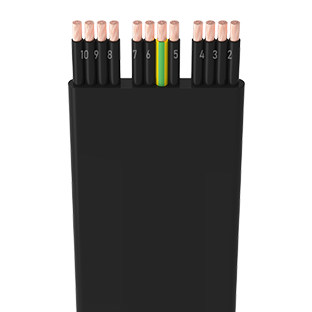
- Festoon systems – the cable hangs in loops from trolleys running on a track, typical for crane trolleys and overhead cranes. Flat cables such as H07VVH6-F are common here.
- Cable chains – for shorter travels and automation, see our guide to PUR cables.
Key reeling cable designs
Reeling cables based on the German DIN VDE 0250 constructions are widely used across Europe:
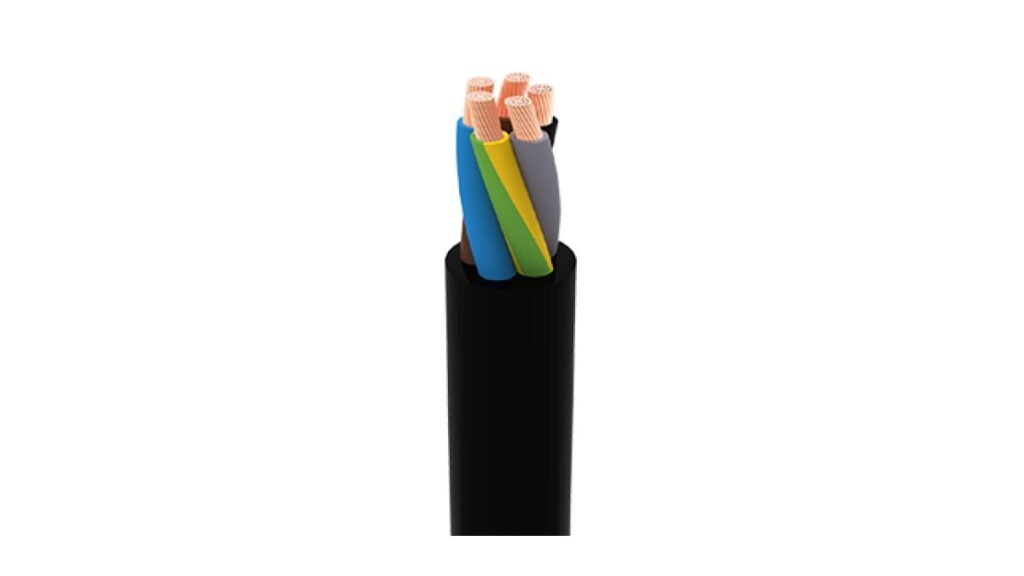
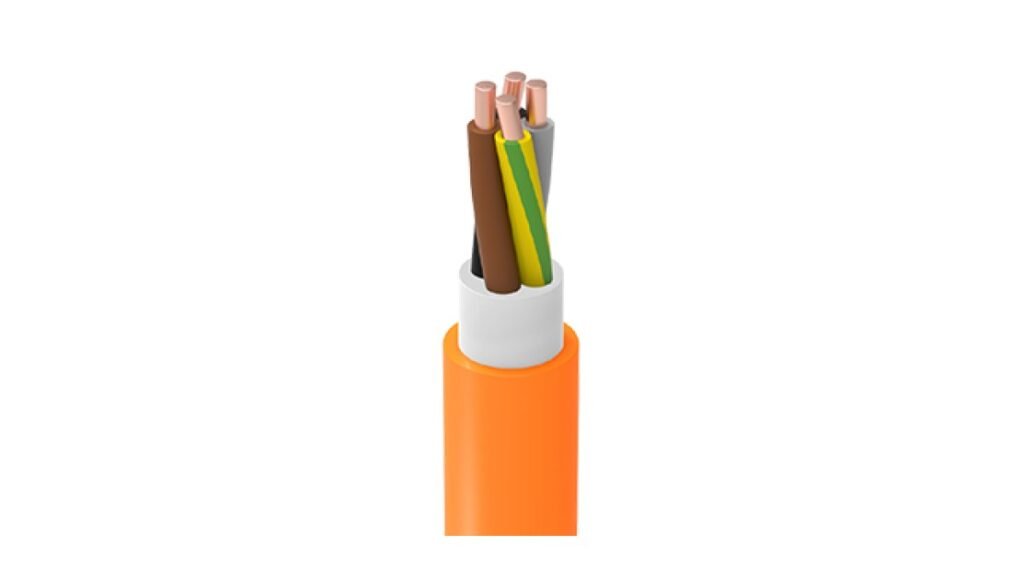
- (N)SHTÖU – low-voltage rubber reeling cable with an anti-torsion protective braid, for spring and motor-driven reels.
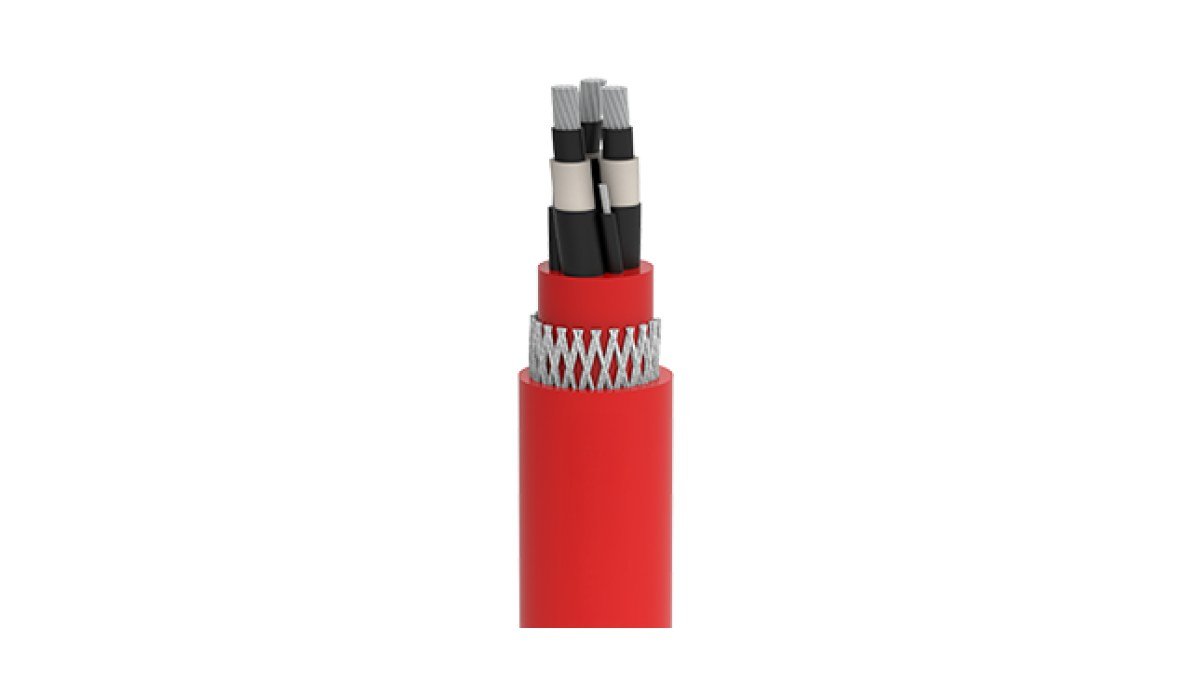
- (N)TSCGEWÖU, MS type – medium-voltage reeling cable with screened cores for high mechanical stress.
- MSS type – reinforced design for higher speeds and tensile loads.
- MSFO and MSSFO – the same designs with integrated optical fibres for crane automation, remote operation and video.
The parameters your supplier needs
- Reel type – monospiral, random wound, or cylindrical; spring or motor driven.
- Travel speed and acceleration – high speeds need cables rated for them.
- Travel length and the position of the feed point (centre or end feed).
- Maximum tensile load on the cable, which depends on the reel drive and cable weight.
- Deflection – number and diameter of guide rollers, and changes of direction.
- Voltage, cores and cross-section, including control and fibre optic elements.
- Environment – UV, ozone, salt atmosphere, low temperatures, oil.
Reel manufacturers usually calculate the permitted tensile load and minimum drum diameter for a given cable. Share the cable’s outer diameter, weight and tensile rating with them early.
Torsion: the hidden cable killer
Most premature reeling cable failures come from torsion introduced during installation or by misaligned guides. Cables should be unrolled from the delivery drum without twisting, laid out straight before being wound onto the machine reel, and installed in the direction recommended by the manufacturer. A cable that “corkscrews” in service is a sign of torsion and should be corrected immediately.
Control pendants and auxiliary circuits
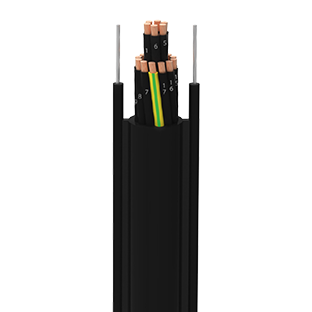
Overhead cranes often combine a festoon system with a hanging control pendant. For that, a pendant control cable with integrated strain-relief elements is the right choice — standard control cables are not designed to carry their own weight.
Spare cables and lead times
Reeling cables for large machines are long, heavy and often made to order. Ports and terminals usually keep a spare length of the main supply cable on site. When budgeting a crane project, plan the spare cable purchase together with the initial supply to benefit from the same production run.
Request a reeling cable offer
Browse our crane and reeling cables and send the reel data through our quote request. We will propose a suitable construction and coordinate the data sheet with your reel supplier if needed.
Frequently asked questions
What information does a reeling cable supplier need?
The reel type, travel speed and acceleration, travel length and feed point, maximum tensile load, guide rollers and deflections, voltage and cores, fibre optic requirements and the environment.
Why do reeling cables fail early?
The most common cause is torsion introduced during installation or by misaligned guides. Unroll the cable without twisting, lay it out straight before winding it onto the reel and check guide alignment.
Can fibre optics run inside a reeling cable?
Yes. Reeling cables such as the MSFO and MSSFO designs integrate optical fibres for automation and remote crane operation, avoiding a separate data cable or slip ring for communication.
Products mentioned in this article
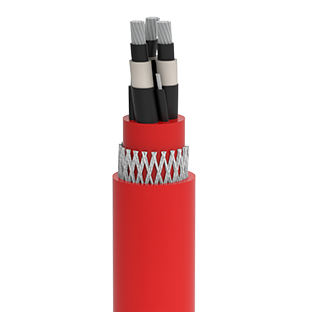 Crane & Reeling Cables
CablesThis cable is specially designed for mobile equipment operating under high to extreme mechanical stresses It is engineered to withstand high travel speeds, dynamic tensile loads, multi-directional changes in movement…
3,6/6 kV / 6/10 kV / 8,7/15 kV…
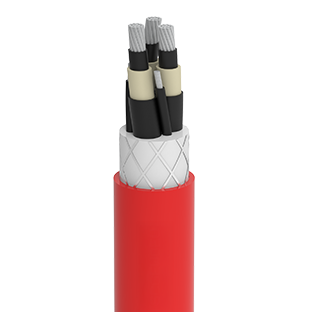 Crane & Reeling Cables
CablesThis cable is specially designed for mobile equipment operating under high mechanical stresses It is engineered to withstand high travel speeds, dynamic tensile loads, multi directional changes in movement across…
3,6/6 kV / 6/10 kV / 8,7/15 kV…
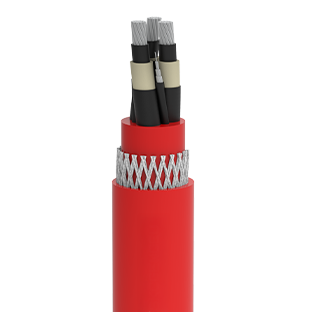 Crane & Reeling Cables
CablesThis cable is specially designed for mobile equipment operating under high to extreme mechanical stresses with integrated fibre optics for the combined transmission of energy and data It is engineered…
3,6/6 kV / 6/10 kV / 8,7/15 kV…
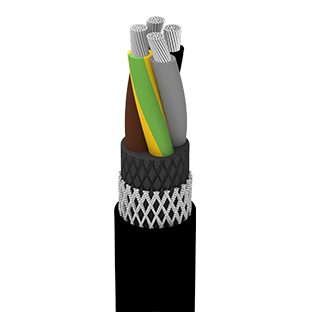 Crane & Reeling Cables
CablesThese flexible low-voltage reeling cables are designed for power supply applications under high mechanical stresses. They are particularly suitable for use in cable reels, hoists, lifts, portable engines, traction motors,…
600/1000 V (U0/U) · -40°C to +90°C
 Industrial Cables
CablesThese power and control flat cables can be used on festoons systems on handling equipment. as overhead cranes. They are Used as control cables in lifts, elevators and conveyor systems.…
450/750 V (U0/U) · -5°C to +70°C
 Industrial Cables
CablesThese pendant cables are used as control or feeder cables in lifts and hoists. The two steel load bearing elements can be detached without damaging the outer sheath and fixed…
300/500 V (U0/U) · -25°C to +90°C
Need a different size, standard or quantity? Request a quote