Control cables are the nervous system of every machine, panel and building automation project. In European specifications you will meet the same handful of German-origin designations again and again: YSLY, YSLCY, YSLYCY, LIYY and LIYCY. They look similar on a cable schedule but behave very differently in a noisy industrial environment. Here is how to tell them apart and choose correctly.
Decoding the letters
These designations follow the German VDE-style naming system:
- Y – PVC (as insulation or sheath, depending on position).
- SL – control cable (“Steuerleitung”).
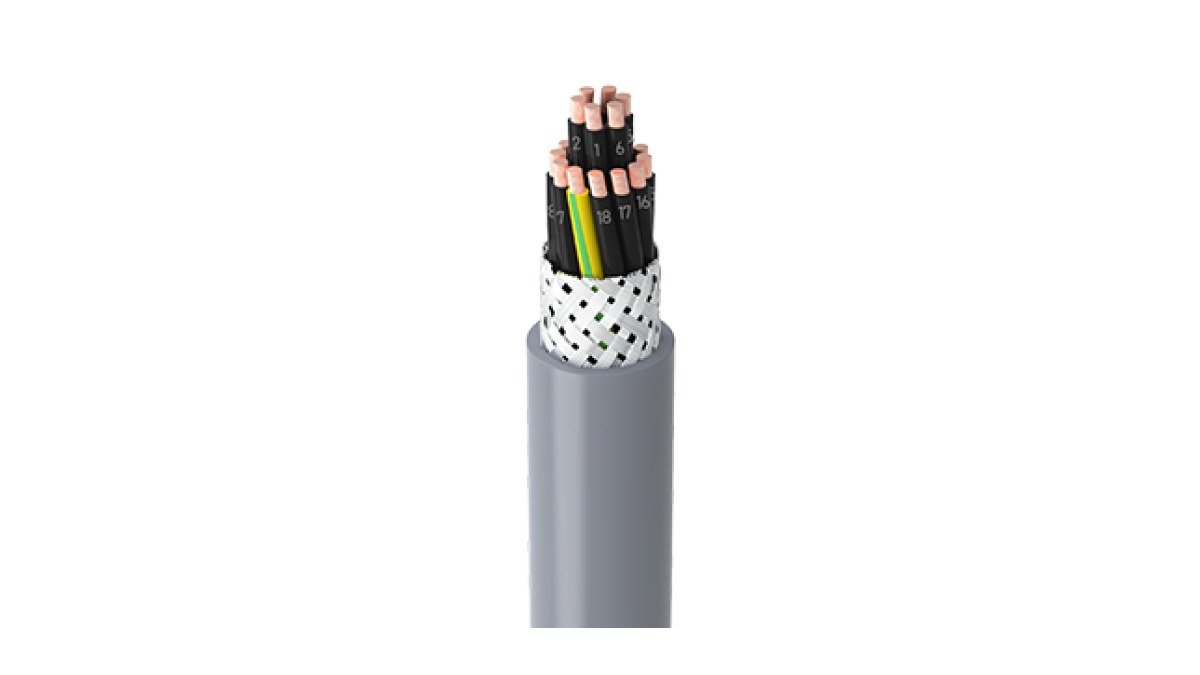
- C – copper braid screen.
- LI – stranded (Litze) conductor, typically used for data and signal cables with smaller cross-sections.
- H – halogen-free compound (in LIHH, LIHCH, HSLH, HSLCH).
The main types compared
When do you need a screened cable?
Electromagnetic interference comes mainly from variable-speed drives, switching power supplies, welding equipment and parallel power cables. A screened cable such as YSLCY or LIYCY is the right choice when:
- the cable carries analogue signals (4–20 mA, 0–10 V) or encoder signals;
- it runs in the same tray as motor cables or drive output cables;
- the machine must meet the EMC Directive (2014/30/EU) and the integrator wants margin in testing;
- cable runs are long, which increases coupling with nearby sources.
For simple on/off control of contactors, lamps and push-buttons in a well-separated panel, an unscreened YSLY is normally sufficient and easier to install.
Screen coverage and grounding
A braid screen only works if it is terminated correctly. Specify the optical coverage you need (typically around 85 % for good EMC performance) and make sure installers use EMC glands or clamps that make 360° contact with the braid. A poorly terminated screen can be worse than no screen at all, because it can create ground loops.
Number of cores and core identification
Control cables are supplied with 2 to more than 60 cores. Most European types use black cores with white printed numbers plus a green-yellow earth (the “J” version), while data cables such as LIYY use colour codes to DIN 47100. Check which system your panel builder expects; changing the core identification half-way through a project causes wiring errors.
Halogen-free alternatives
For hospitals, airports, rail vehicles, tunnels and many public buildings, specifications increasingly require halogen-free materials. The direct equivalents are HSLH and HSLCH for control cables and LIHH and LIHCH for data cables. See our guide to halogen-free cables for the test standards behind the term.
Oil, drag chains and outdoor use
Standard PVC control cables are not designed for continuous flexing or for heavy oil exposure. For cable carriers and robots, choose a dedicated PUR cable, which we discuss in our article on PUR cables for drag chains. For outdoor use with UV exposure, check that the sheath is UV-resistant or install in protected conduit.
Our recommendation
Start from the signal type and environment, not the price. Use YSLY for plain control, YSLCY or YSLYCY near drives and power cables, LIYY and LIYCY for low-voltage signals, and halogen-free versions where the building or vehicle requires it. Browse our complete range of industrial and control cables, or ask us for a quote with core counts and lengths — we can supply mixed cable lists in one consolidated shipment.
Frequently asked questions
When should I use YSLCY instead of YSLY?
Use YSLCY when the control circuit runs close to motor cables, drives or other sources of interference, or carries sensitive analogue signals. YSLY is fine for simple on/off control in panels and machines where interference is not a concern.
What is the difference between LIYY and YSLY?
LIYY is a data and signal cable with small cross-sections and colour-coded cores, used in electronics and instrumentation. YSLY is a control cable with larger cross-sections, usually numbered black cores and a green-yellow earth, used for control circuits in machines and buildings.
Can PVC control cables be used in drag chains?
Standard PVC control cables are not designed for continuous movement and will fail early in cable carriers. Use a PUR cable rated for continuous flexing, with the bending radius and travel data checked against the datasheet.
Products mentioned in this article
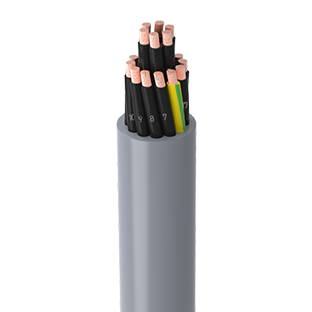 Industrial Cables
CablesThese flexible cables are used as control cables for machines, production lines, control systems, assembly lines, measuring systems and data processing where there is low mechanical stress exist. They can…
300/500 V (U0/U) · -5°C to +70°C
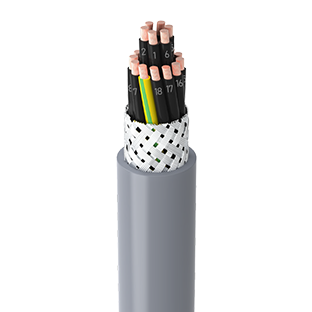 Industrial Cables
CablesThese flexible cables are used as signal and control cables for machines, production lines, control systems, assembly lines, measuring systems and data processing where there is low mechanical stress exist.…
300/500 V (U0/U) · -5°C to +70°C
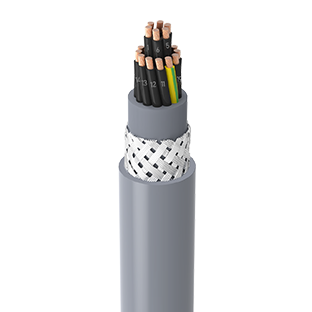 Industrial Cables
CablesThese flexible cables are used as signal and control cables for machines, production lines, control systems, assembly lines, measuring systems and data processing where there is low mechanical stress exist.…
300/500 V (U0/U) · -5°C to +70°C
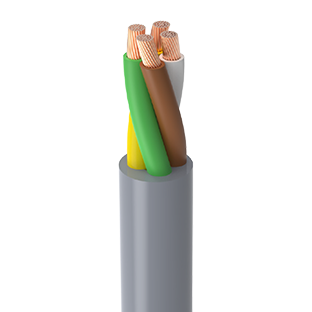 Industrial Cables
CablesThese cables are used for data transmission, signalling and monitoring in aumation, audio/vision, security and control systems indoor where flexibility is required.
300/500 V (U0/U) · -30°C to +70°C
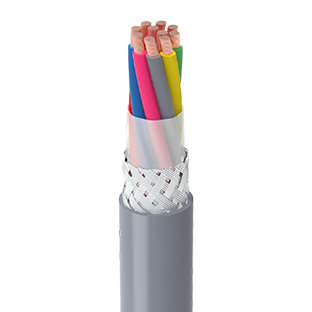 Industrial Cables
CablesThese cables are used for data transmission, signalling and monitoring in aumation, audio/vision, security and control systems indoor where electromagnetic disturbances exists.
300/500 V (U0/U) · -30°C to +70°C
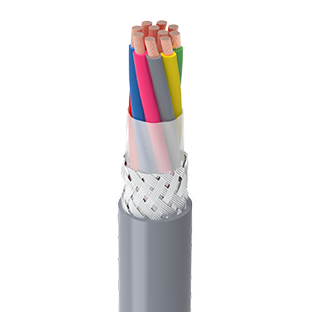 Industrial Cables
CablesThese cables are used for data transmission, signalling and monitoring in aumation, audio/vision, security and control systems indoor where electromagnetic disturbances exists and when higher safety required in case of…
300/500 V (U0/U) · -30°C to +70°C
Need a different size, standard or quantity? Request a quote