European cable designations look cryptic, but they follow a logical system defined by CENELEC (the HD 361 coding scheme). Once you know the system, a code such as H05VV-F 3G1.5 tells you the voltage, materials, conductor type and core arrangement at a glance. This short decoder helps buyers check that a quotation matches the specification — and spot substitutions.
The structure of a harmonised code
A designation is read from left to right in this order:
- Type of standard
- Rated voltage
- Insulation material
- Sheath and other layers
- Special construction (if any)
- Conductor type
- Number of cores, earth core and cross-section
1. Type of standard
- H – harmonised type.
- A – recognised national type (for example, a type only used in one country).
2. Rated voltage (U0/U)
3 and 4. Insulation and sheath materials
The same letters are used for insulation and sheath. The most common are:
- V – PVC.
- R – ethylene-propylene rubber or an equivalent synthetic elastomer.
- N – polychloroprene.
- Z – cross-linked compound with low emission of smoke and corrosive gases (halogen-free).
- Z1 – thermoplastic compound with low emission of smoke and corrosive gases (halogen-free).
- B – ethylene-propylene rubber.
- Q – polyurethane.
- T – textile braid.
So VV means PVC insulation and PVC sheath, RN means rubber insulation and polychloroprene sheath, and ZZ means halogen-free cross-linked insulation and sheath.
5. Special constructions
Letters after the material codes and before the hyphen indicate special designs, for example H for a flat, divisible (separable) construction, H2 for a flat, non-divisible construction, or H6 for flat cables with three or more cores (as in H07VVH6-F flat cable used for lifts and cranes). 8 after a material code can indicate a version for use in water, as in H07RN8-F.
6. Conductor type
7. Cores and cross-section
The last part gives the number of cores, then G if a green-yellow earth core is included or X if not, then the cross-section in mm². 3G1.5 is three cores of 1.5 mm² including green-yellow; 4X2.5 is four cores of 2.5 mm² without green-yellow.
Worked examples
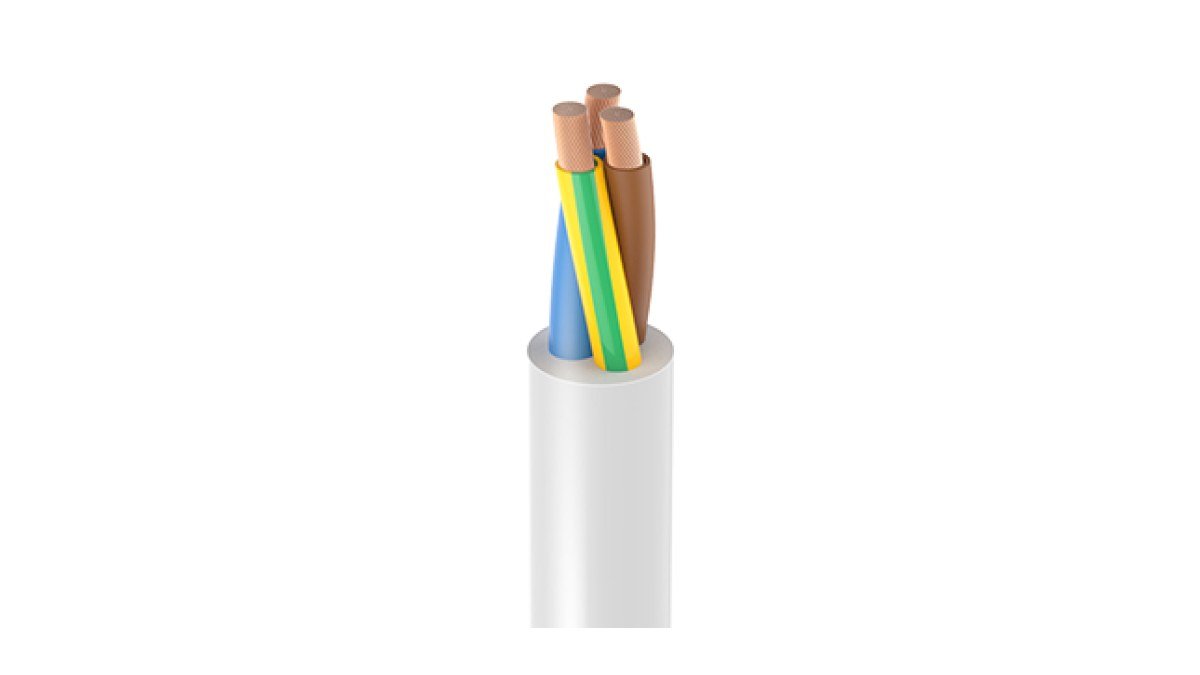
- H05VV-F 3G1.5 – harmonised, 300/500 V, PVC insulation and sheath, flexible conductor, three cores with earth. The standard cord for light-duty appliances and office equipment.
- H07V-K 1×6 – harmonised, 450/750 V, PVC-insulated single core with a flexible conductor for fixed wiring in conduit and panels.
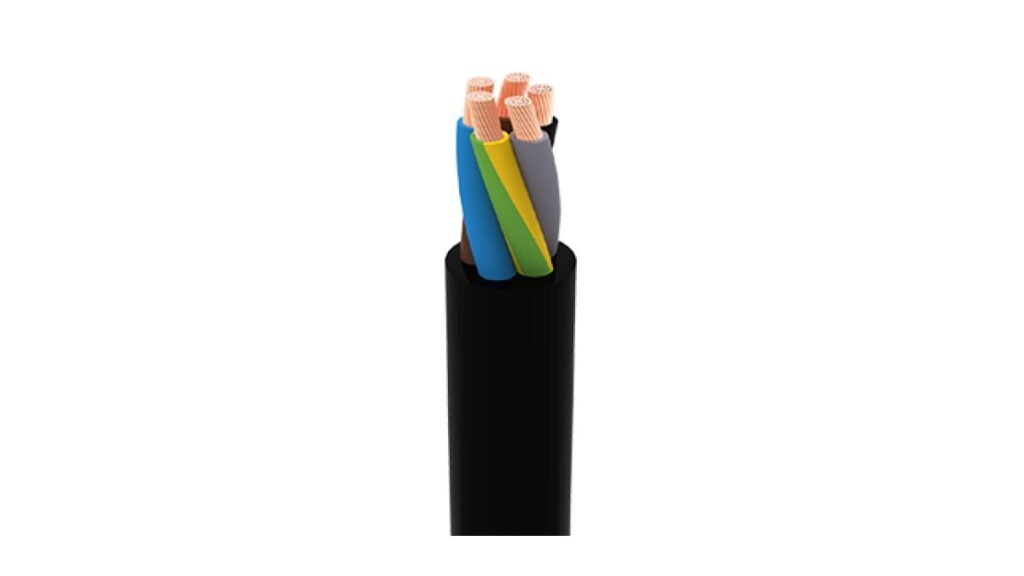
- H07ZZ-F 5G4 – the halogen-free equivalent of a heavy flexible cable, for public buildings, tunnels and installations where smoke must be limited.
- H07Z1-K 1×2.5 – halogen-free single-core wiring cable, the low-smoke alternative to H07V-K.
- H03RT-H – 300/300 V rubber-insulated cord with a textile braid, used for irons and heating appliances.
Harmonised codes versus national codes
You will also see German-style codes such as NYM or NYY, manufacturer trade names, and Italian CEI codes such as FG7R or FG16. These are national or manufacturer designations, not harmonised types. They are perfectly valid in the right market, but they cannot be swapped for a harmonised type without checking the construction. Our guide to Italian cable codes covers the CEI system.
Need help matching a code?
If you have a cable schedule with mixed national and harmonised codes, send it to us through the quote form. We will match each line to an available product, flag any inconsistencies and propose equivalents where a type is hard to find. You can also browse all industrial cables in our catalogue.
Frequently asked questions
What does the G mean in 3G1.5?
G means the cable includes a green-yellow earth core. 3G1.5 is a three-core cable with one green-yellow core and 1.5 mm² conductors. An X instead of G means there is no green-yellow core.
What is the difference between -K and -F conductors?
Both are class 5 flexible conductors. -K is used for single-core cables intended for fixed installation, such as H07V-K in conduits and panels, while -F is used for flexible cables and cords that move in service, such as H05VV-F.
Are harmonised cables accepted in every EU country?
Harmonised types are recognised across the CENELEC member countries, which makes them easy to specify internationally. National wiring rules still decide where a cable type may be installed, and permanent installation in buildings also requires the CPR classification.
Products mentioned in this article
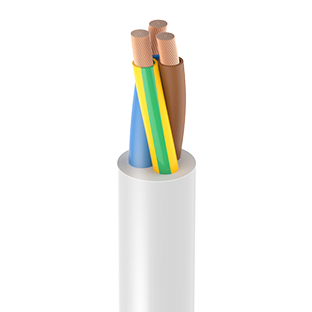 Industrial Cables
CablesThey are mainly used in mobile equipments, household and portable appliances where there is low mechanical stress.
300/500 V (U0/U) · -5°C to +70°C
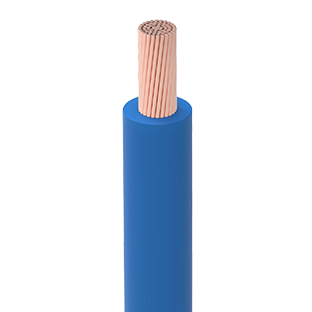 Industrial Cables
CablesThey are used as installation cables in various electronic equipments and in switchboards.
H05V-K 300/500V I H07V-K 450/750 V (U0/U) · -30°C to +70°C
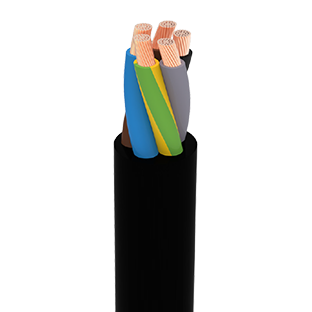 Industrial Cables
CablesThese halogen-free flexible cables are used as power and control cables temporary indoor and permanent outdoor apllications. It consist low grade smoke and corrosive gases and suitable to use for…
450/750 V (U0/U)
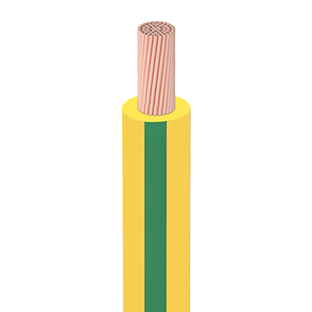 Industrial Cables
CablesThey are used as installation cables in distribution boards, switchboards and various appliances in closed areas when higher safety required in case of fire. They can be used on and…
H05Z1-K – 300/500V I H07Z1-K 450/750 V · -30°C to +70°C
 Industrial Cables
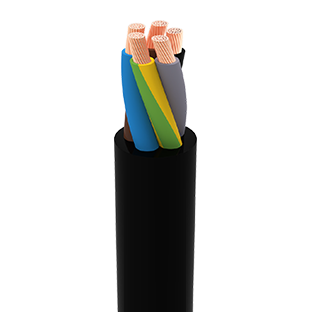
CablesThese rubber sheathed flexible cables are used as power and control cables in open-built plants, industry works, electrical tools and mobile equipments under heavy conditions and medium mechanical stress. Due…
450/750 V (U0/U) · -25°C to +60°C
 Industrial Cables
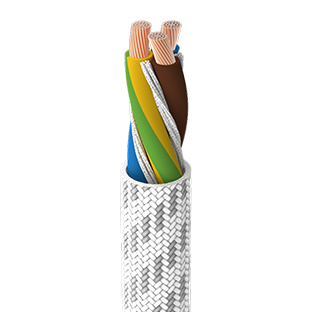
CablesThese rubber insulated cables with textile braid sheath are mainly used in household appliances and mainly for electrical iron cords. They are also available to use for ovens and roaster…
300/300 V (U0/U) · -20°C to +60°C
Need a different size, standard or quantity? Request a quote