Mining machines move constantly. Excavators, shovels, continuous miners, crushers and conveyors are fed through flexible cables that are dragged, reeled, run over and flooded. A cable failure stops production and, in underground mines, can be a serious safety hazard. Selecting the right trailing or reeling cable is therefore one of the most important decisions in mine electrification.
The main standards families
Three families of standards dominate mining cable specifications:
- DIN VDE 0250 (Germany and much of Europe) – rubber-sheathed flexible cables such as NSSHÖU for low voltage and NTSCGEWÖU for medium voltage.
- BS 6708 (United Kingdom and many export markets) – flexible trailing cables for mining and quarrying, identified by type numbers such as Type 7, 11, 16, 201 or 307.
- AS/NZS 1802 and AS/NZS 2802 (Australia and New Zealand) – reeling and trailing cables for underground coal mining (1802) and other mining applications (2802), also specified on international projects.
Some mining companies also use their own specifications; the MGM types in our catalogue are an example.
Low-voltage trailing cables: NSSHÖU
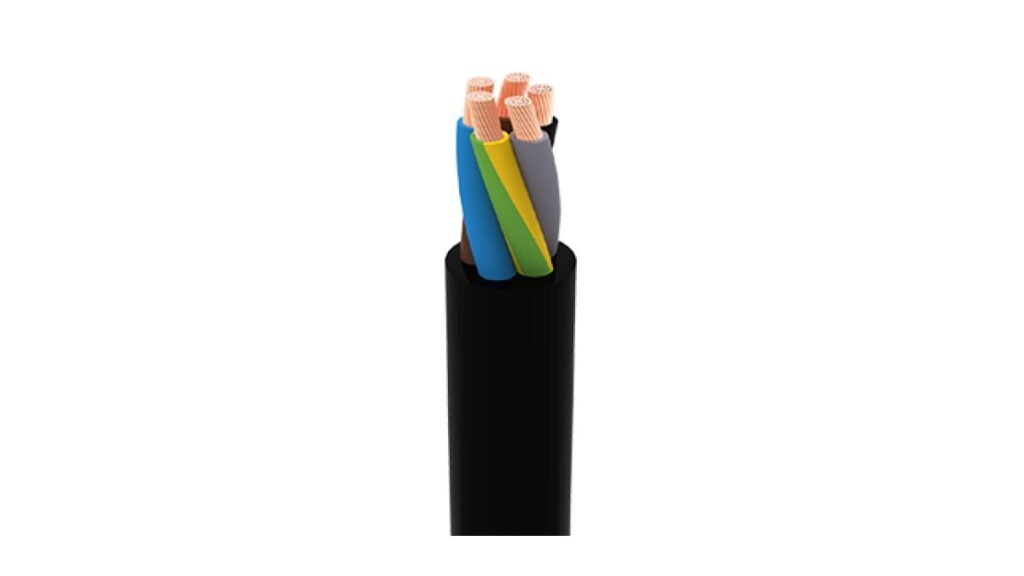
NSSHÖU is a heavy-duty rubber cable for very high mechanical stress at 0.6/1 kV. The double-layer rubber sheath resists abrasion, oil and weather, and the cable is used for mobile machinery, conveyor drives and pumps. Screened versions such as (N)SSHCÖU add concentric copper screening for EMC and earth-fault protection, and (N)SSHCGEWÖU adds a screen over each power core.
Medium-voltage trailing and reeling cables: NTSCGEWÖU
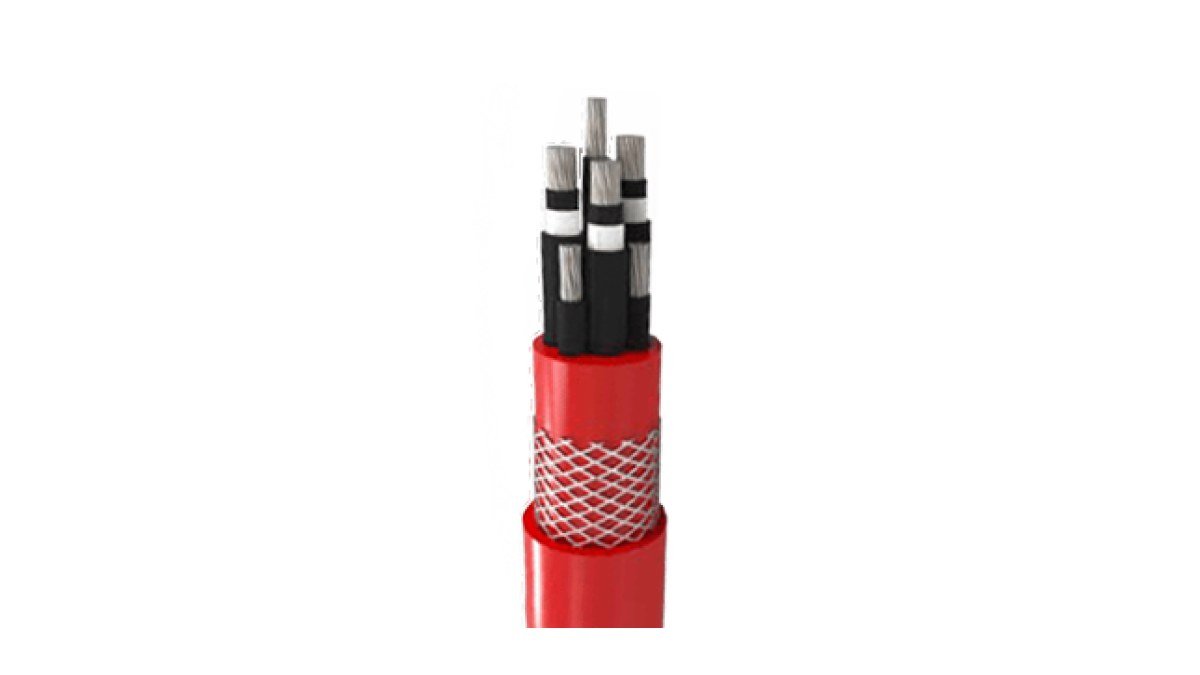
NTSCGEWÖU is the classic medium-voltage flexible cable for large mobile equipment such as bucket-wheel excavators, shovels and spreaders, at voltages from 3.6/6 kV upwards. Each power core is screened, earth conductors are divided, and an anti-torsion braid between the inner and outer sheath allows reeling under tension. Variants with fibre optic elements are used where machine communication runs through the same cable.
BS 6708 types
BS 6708 uses type numbers rather than letter codes. The type defines the voltage, screening and construction — for example individually screened power cores, collective screens or pilot cores for earth monitoring. Our catalogue includes many of the common types such as BS 6708 Type 7M, Type 201 and Type 307; the full list is in our mining cables category.
AS/NZS types
Australian-standard cables such as AS/NZS 1802 Type 275 (reeling and trailing for underground mining) and AS/NZS 2802 Type 450 (for mining machines outside underground coal mines) are often specified by multinational mining companies, including on projects outside Australia. They include defined arrangements of power, earth and pilot cores and specific screen designs.
What matters most in selection
- Duty type – trailing on the ground, reeling on a drum, or festoon. Reeling needs anti-torsion design and a known tensile limit.
- Voltage and earthing system – including screened cores and earth-fault monitoring requirements.
- Pilot or monitoring cores – many mine systems use a pilot core to monitor the earth conductor continuity.
- Mechanical stress – abrasion, crushing, sharp rock, vehicle traffic.
- Environment – water, mud, oil, UV, low temperature, flame retardance underground.
- Armour – for fixed or semi-fixed installations exposed to damage, an armoured flexible power cable can be the better choice.
Cable life and handling
Most mining cable failures are mechanical. Train operators to avoid running over cables, use cable bridges and sleds, respect bending radii on reels and in guides, and repair sheath damage promptly with approved splice kits. Logging failures by location helps identify where better protection or a heavier cable type is needed.
Request a mining cable quotation
For an accurate offer, send the standard and type, voltage, number and size of cores, pilot or fibre requirements, lengths and the machine type. Use our quote form; we also supply cables for tunnelling and TBM projects and crane reeling systems.
Frequently asked questions
What is the difference between NSSHÖU and NTSCGEWÖU?
NSSHÖU is a low-voltage (0.6/1 kV) heavy-duty rubber cable for mobile equipment. NTSCGEWÖU is a medium-voltage cable with screened cores and an anti-torsion braid, designed for trailing and reeling on large machines.
Why do mining cables have pilot cores?
Pilot cores are used by earth-continuity monitoring systems. If the earth conductor is damaged, the monitoring system detects it and disconnects the supply, which is an important safety function in mines.
Can I replace a BS 6708 cable with a DIN VDE 0250 type?
Not without checking. The standards define different constructions, screens and pilot arrangements. Any substitution should be approved by the mine’s electrical engineer and checked against the protection system.
Products mentioned in this article
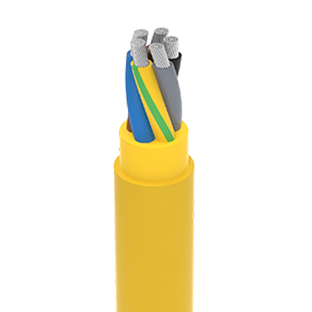 Mining Cables
CablesFor use in mines, quarries, industrial areas, construction sites, agricultural operations and as trailing cable. The cables are also suitable for fixed application as power supply cable for underground mining…
600 / 1000 V (U0/U) · -25°C to +80°C
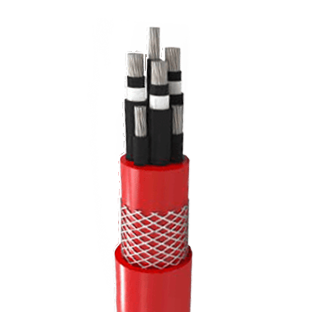 Mining Cables
CablesFor the connection of electrical equipment, large material handling machines such as excavators, cranes, dumpers in mining and tunelling applications. The flexible cable design allows for movement of the equipment…
3,6/6 kV 6/10 kV 8,7/15 kV 12/20 kV…
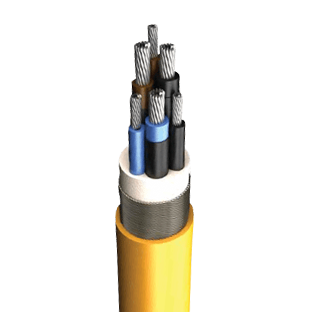 Mining Cables
CablesUsed in open and underground mines as lighting cable. Monitoring core makes easy to detect outer damages.
0.6/1 kV
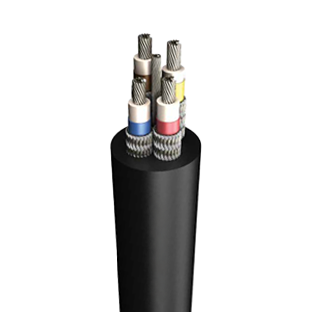 Mining Cables
CablesUsed for supplying excavating, crushing machines and equipment.
640/1100 V
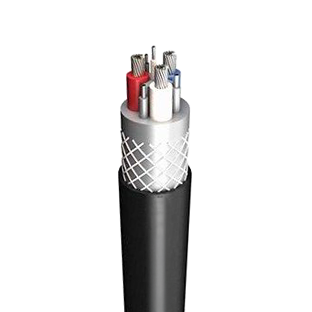 Mining Cables
CablesThese cables can be used for fixed and mobile equipment connections that are used in offices and kitchens where there
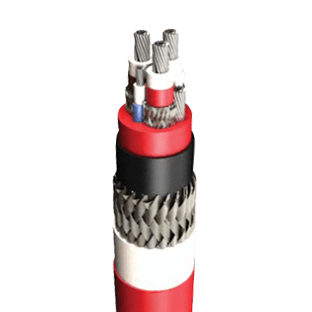 Mining Cables
CablesUsed as flexible power cable.
1.8/ 3.3 kV, 3.6/6.6 kV, 6.6/11 kV
Need a different size, standard or quantity? Request a quote