Cables on ships and offshore units face conditions that land installations never see: constant vibration, salt atmosphere, oil, wide temperature ranges and, above all, the impossibility of simply walking out of a fire. That is why shipboard cables are built to their own family of standards and approved by classification societies. Shipyards, ship repairers and naval architects across Europe specify them by standard, type code and approval.
The IEC 60092 family
The key international standards for shipboard cables are in the IEC 60092 series, including:
- IEC 60092-350 – general construction and test requirements for shipboard and offshore power, control and instrumentation cables.
- IEC 60092-353 – power cables for rated voltages of 1 kV and 3 kV.
- IEC 60092-354 – medium-voltage power cables from 6 kV up to 30 kV.
- IEC 60092-360 – insulating and sheathing materials.
- IEC 60092-376 – cables for control and instrumentation circuits up to 150/250 V.
On top of these, fire-performance standards apply: flame retardance to IEC 60332-1 and IEC 60332-3 (bunched cables), halogen-free and low-smoke properties to IEC 60754 and IEC 61034, and fire resistance to IEC 60331 for safety circuits.
Common marine cable designations
Marine cables are often named with a code that describes their construction. For example:
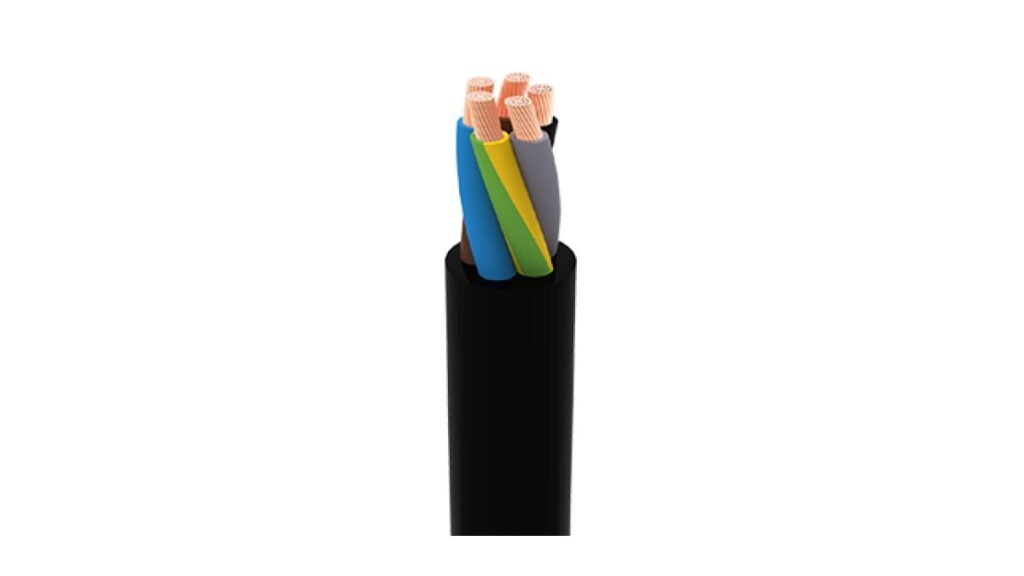
- M2XH – marine cable with cross-linked (XLPE) insulation and halogen-free sheath, for power and lighting. See M2XH (FI).
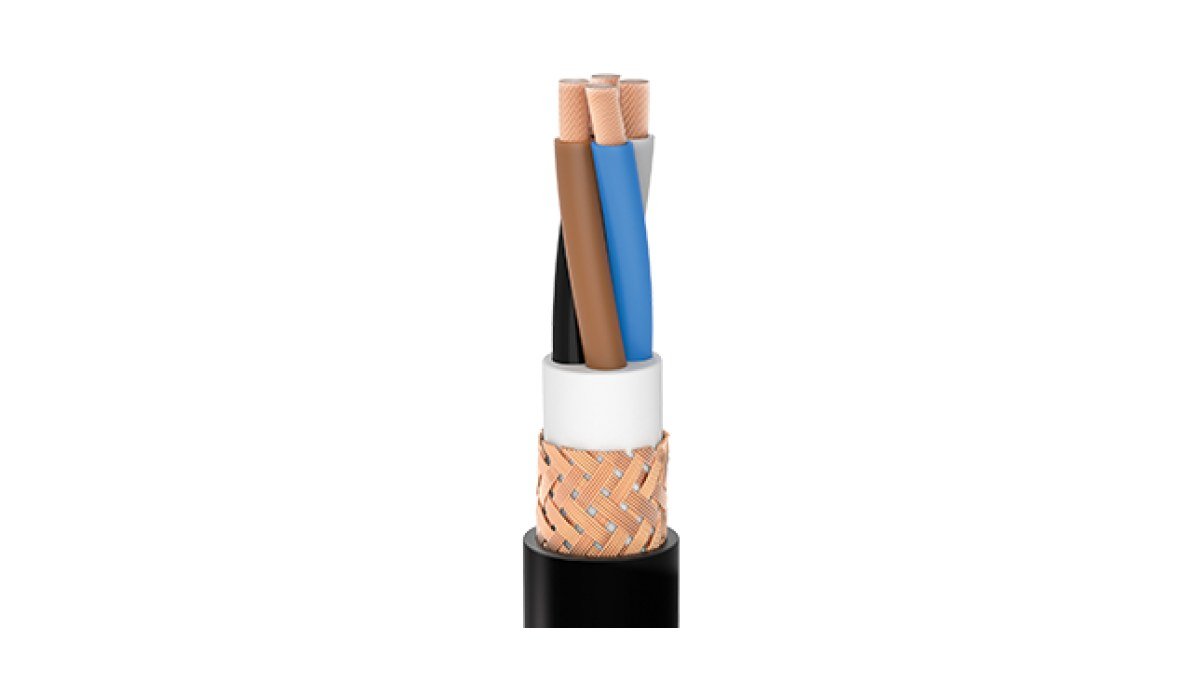
- M2XCH – as above with a copper braid screen, for EMC-sensitive circuits. See M2XCH (FI).
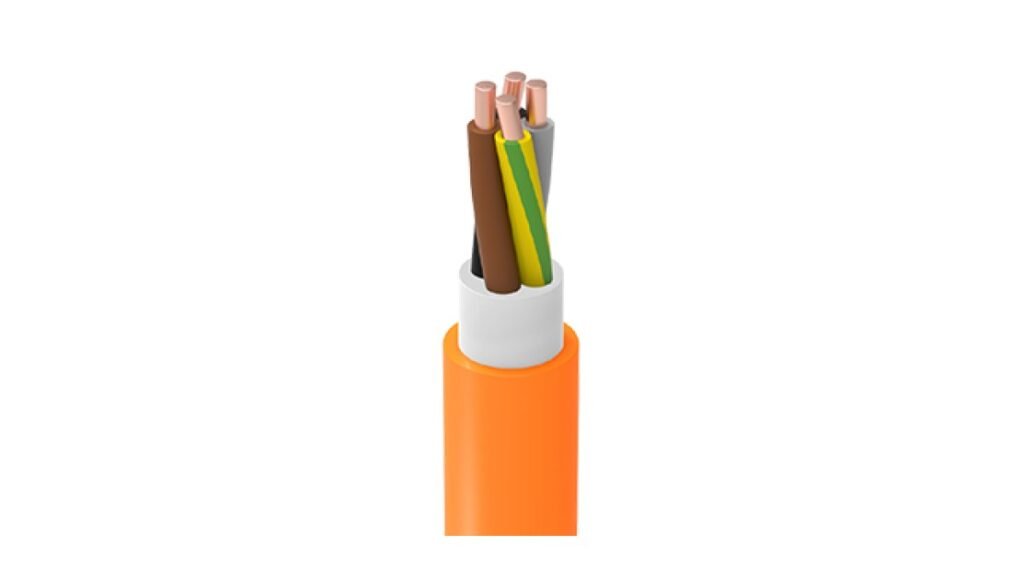
- FFR – fire-resistant version for safety circuits, such as M2XH-FFR.
- MGH / MGCH – types with HEPR rubber insulation, such as MGCH.
- MVCECH – medium-voltage screened power cables, such as MVCECH 6/10 (12) kV.
FI or NOFI?
Many marine types come in two versions:
- FI – with an extruded inner covering (bedding) between the cores and the sheath. It gives a round, compact profile that seals well in cable glands and transits.
- NOFI – without the extruded inner covering, lighter and easier to strip, often used where weight and installation time matter.
The choice often depends on the cable transit system used on board and the yard’s practice. Specify it explicitly.
Classification society approvals
Ships are built and maintained under the rules of a classification society. Cables must be type-approved by the society that classes the vessel. The main societies active in Europe include:
- DNV
- Lloyd’s Register (LR)
- Bureau Veritas (BV)
- RINA
- American Bureau of Shipping (ABS)
- ClassNK, Türk Loydu, RMRS and others for specific fleets
Our marine cable pages list the approvals held for each type. Always check that the approval certificate is valid on the date of delivery and covers the cross-sections you order.
What to include in a marine cable enquiry
- Cable type and standard (for example “M2XCH FI to IEC 60092-353”).
- Number of cores, cross-section and voltage rating.
- Required classification society approval.
- Fire performance: flame retardant only, or fire resistant (FFR) for safety circuits.
- Sheath colour, if the yard uses colour coding.
- Drum lengths and delivery address (shipyard, port or warehouse).
Special marine cables
Beyond standard power and control, modern vessels need VFD cables for electric propulsion and drives, shielded marine data cables for networks, and shore power cables for cold-ironing at ports — an area that is growing fast with European port electrification.
Source marine cables through Wesourcia
Browse our complete marine cable range and marine data cables, or send us the cable list from your electrical drawings. We quote with approval certificates and can consolidate deliveries for newbuild and refit projects.
Frequently asked questions
Which standard applies to shipboard power cables?
Shipboard power cables are generally built to the IEC 60092 series: IEC 60092-353 for 1 kV and 3 kV power cables, IEC 60092-354 for medium voltage, and IEC 60092-376 for control and instrumentation cables.
What is the difference between FI and NOFI marine cables?
FI types have an extruded inner covering under the sheath, giving a round, compact profile that seals well in cable transits. NOFI types have no extruded inner covering, which makes them lighter and quicker to strip.
Do marine cables need classification society approval?
Yes, cables installed on classed vessels must normally be type-approved by the classification society that classes the ship, such as DNV, Lloyd’s Register, Bureau Veritas, RINA or ABS.
Products mentioned in this article
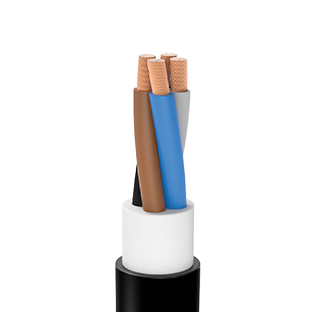 Marine Cables
CablesUsed as fixed installation cables in various electromechanical and electronic equipments of marine vehicles, in most areas & on open deck in ships.
0,6 / 1 kV · -40°C / + 90°C
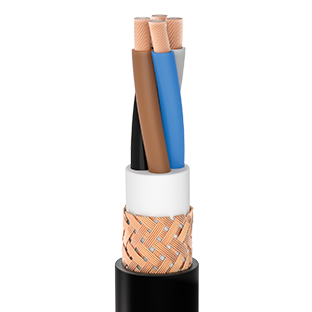 Marine Cables
CablesUsed as fixed installation cables in various electromechanical and electronic equipments of marine vehichles, in most areas & open deck in ships. Due to its’ overall screen the electromagnetic interference…
0,6 / 1 kV · -40°C / + 90°C
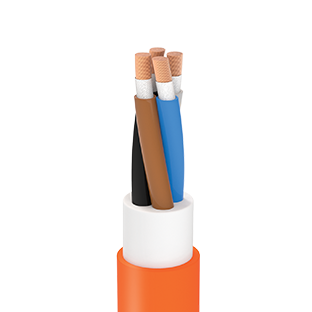 Marine Cables
CablesUsed on marine vehicles as fixed installation cables of various electromechanical and electronic equipments, where sustainable connection during fire is required.
0,6 / 1 kV · -40°C / + 90°C
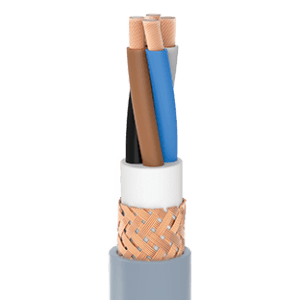 Marine Cables
CablesUsed as fixed installation cables in various electromechanical and electronic equipments of marine vehicles. Due to its’ overall screen, environmental electromagnetic interference is minimized.
0,6 / 1 kV · -40°C / + 90°C
 Marine Cables
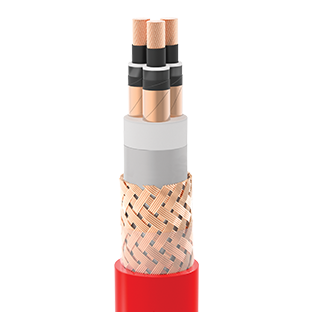
CablesMedium Voltage power distribution, electric power transport between the engine room generator and electrical machines. Used as fixed installation cables in various electromechanical and electronic equipments. Due to its’ overall…
6 / 10 kV · -40°C / + 90°C
Need a different size, standard or quantity? Request a quote